PAWGENIX USA RESEARCH COLLECTIONS For research use only

THE PAWGENIX USA SHOP

The collection.
Unmistakably Pawgenix.

Explore canine and equine editions, single peptides, and signature blends. Choose a collection to find your research selection.

Prices per vial in USD. Review your checkout total and savings, choose Zelle or Wise and pay, then upload your payment screenshot to place your order. Admin verifies payment before processing.

Horse Collection

Equine editions only. Research areas describe experimental study topics, not veterinary indications.

RESEARCH AREASTendon tissueIndividual ingredient research

Illustrative only. Benefits in dogs or horses are not established. View evidence ↗
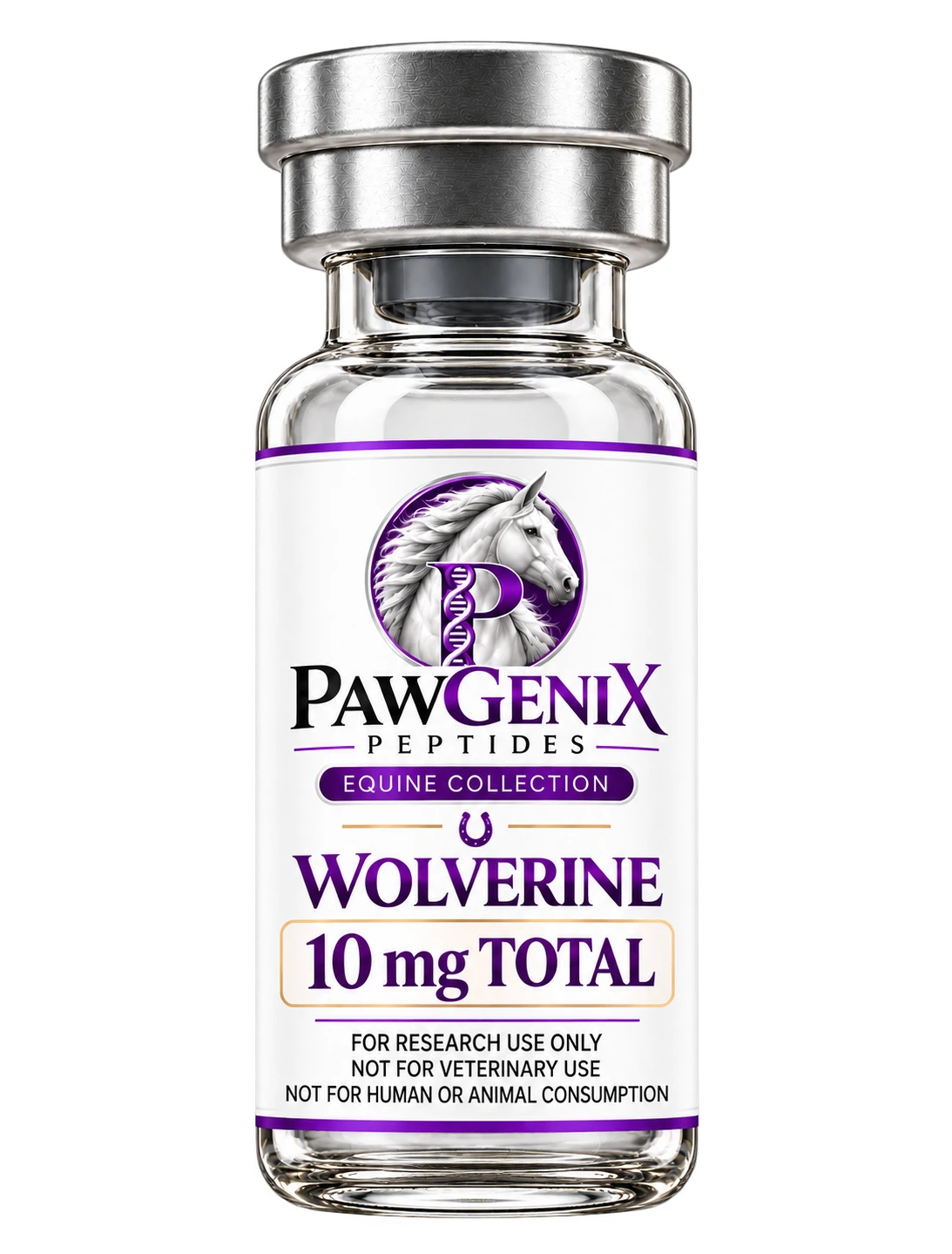
Peptide blendWolverine · 10 mg per vial · Equine collectionEquine collection

Equine collection

Wolverine

BPC-157 5 mg + TB-500 5 mg

$50.00Per vial · USD
Per vial · USD$50.00 total
Quantity savingsUp to 8%
View per-vial prices
Your quantity savings · per vial
QuantitySavingsPrice
0%$50.00
3%$48.50
5%$47.50
8%$46.00
Each peptide, strength and collection qualifies separately. Water is excluded. Highest discount applies; no stacking.
Research & product details

Blends & formulation research

Wolverine is a blend name, not a single peptide. Wolverine Blend 10 mg contains BPC-157 5 mg + TB-500 5 mg. Wolverine Blend 20 mg contains BPC-157 10 mg + TB-500 10 mg.

Functions studied: Its listed ingredients are studied separately for tendon-cell behavior and thymosin-related biology. Ingredient mechanisms do not establish a combined Wolverine effect.

Experimental uses: Blend composition and formulation research. The 10 mg edition lists BPC-157 5 mg + TB-500 5 mg; the 20 mg edition lists BPC-157 10 mg + TB-500 10 mg.

Animal research: The linked papers concern individual ingredients in rat tissue or equine analytical samples. They are not animal trials of Pawgenix USA Wolverine.
Definition & research focus
View COA status
RESEARCH AREASNerve signalingRat nerve-injury research

Illustrative only. Benefits in dogs or horses are not established. View evidence ↗

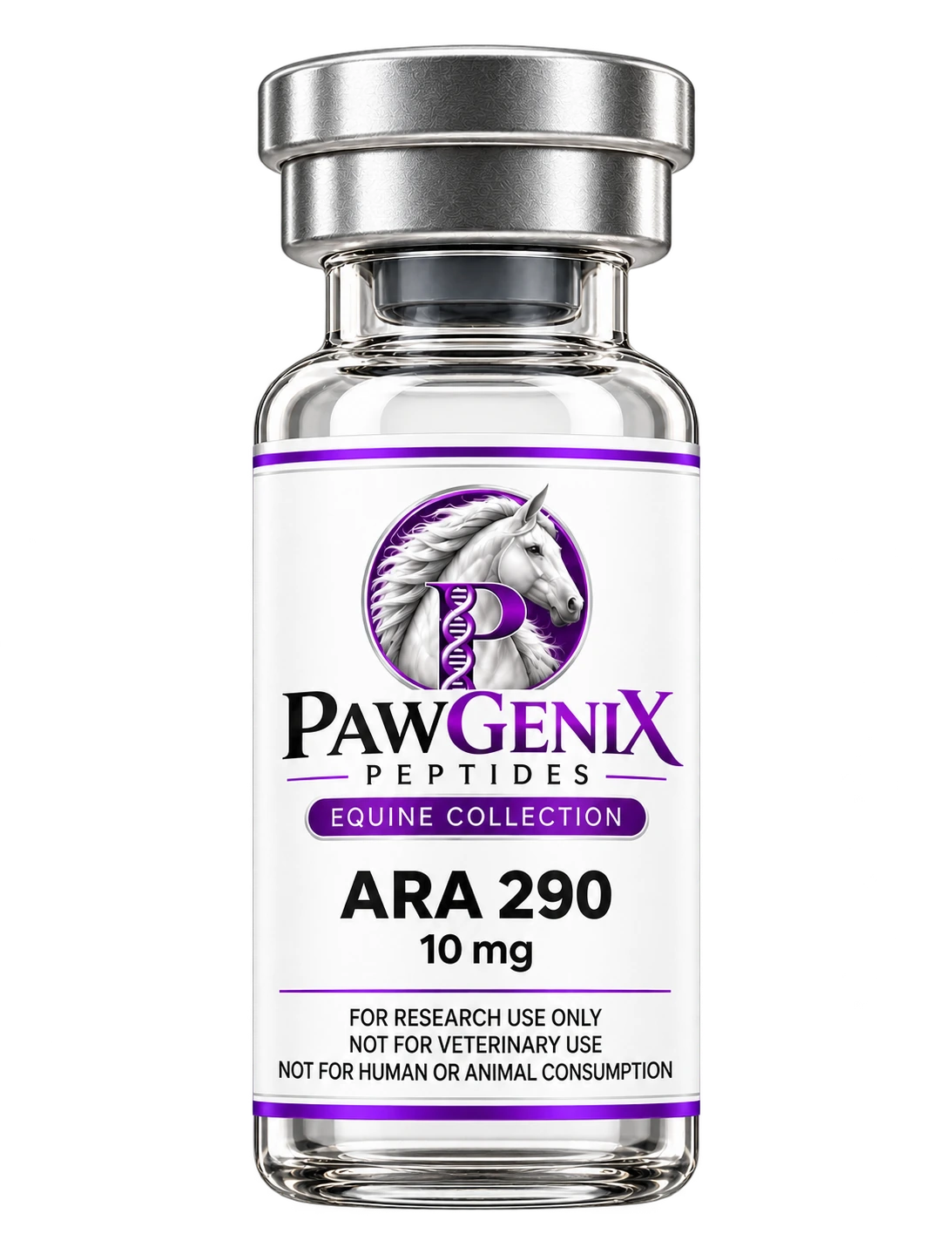
Single peptideARA 290 · 10 mg per vial · Equine collectionEquine collection

Equine collection

ARA 290

10 mg per vial

$50.00Per vial · USD
Per vial · USD$50.00 total
Quantity savingsUp to 8%
View per-vial prices
Your quantity savings · per vial
QuantitySavingsPrice
0%$50.00
3%$48.50
5%$47.50
8%$46.00
Each peptide, strength and collection qualifies separately. Water is excluded. Highest discount applies; no stacking.
Research & product details

Nerve & repair signaling

ARA 290 is a synthetic 11-amino-acid peptide modeled on part of erythropoietin, a naturally occurring signaling protein.

Functions studied: Investigated for signaling through the innate repair receptor, a receptor complex associated with responses to tissue injury. Rat experiments examined spinal microglia, the immune cells of the nervous system.

Experimental uses: Experimental nerve-injury and neuroinflammation research, including measurement of altered sensitivity after nerve damage.

Animal research: The linked study used rats. It reported changes in sensory responses and spinal microglial activity; these are experimental findings, not a canine or equine treatment indication.

Definition & research focus
View COA status
RESEARCH AREASTendon tissueRat tendon & cell research

Illustrative only. Benefits in dogs or horses are not established. View evidence ↗

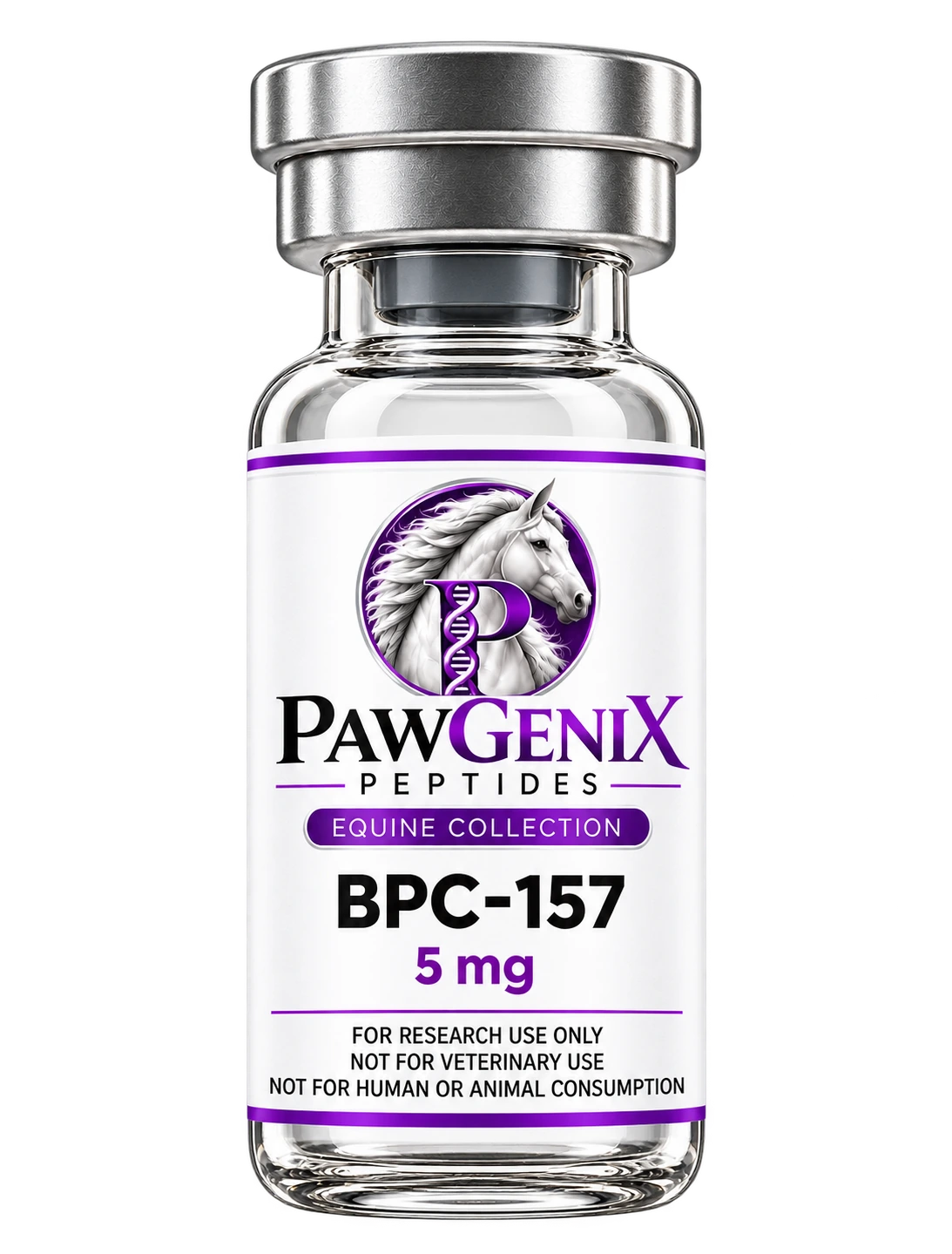
Single peptideBPC-157 · 5 mg per vial · Equine collectionEquine collection

Equine collection

BPC-157

$45.00Per vial · USD
Per vial · USD$45.00 total
Quantity savingsUp to 8%
View per-vial prices
Your quantity savings · per vial
QuantitySavingsPrice
0%$45.00
3%$43.65
5%$42.75
8%$41.40
Each peptide, strength and collection qualifies separately. Water is excluded. Highest discount applies; no stacking.
Research & product details

Tissue & cell research

BPC-157 is an experimental 15-amino-acid peptide whose sequence is described as part of a body protection compound identified in human gastric juice.

Functions studied: Researchers study how tendon cells move, survive stress, and organize during tissue outgrowth. Its biological mechanisms remain under investigation.

Experimental uses: Tendon and soft-tissue repair models, plus pharmacokinetic research on absorption, breakdown, distribution, and elimination.

Animal research: Tendon research includes rat tissue and cells. A separate 2022 study used rats and beagle dogs to examine pharmacokinetics. The dog study measured how the compound moves through the body, rather than recovery from a clinical injury.

Definition & research focus
View COA status
RESEARCH AREASSkin & wound researchLaboratory & mouse models

Illustrative only. Benefits in dogs or horses are not established. View evidence ↗

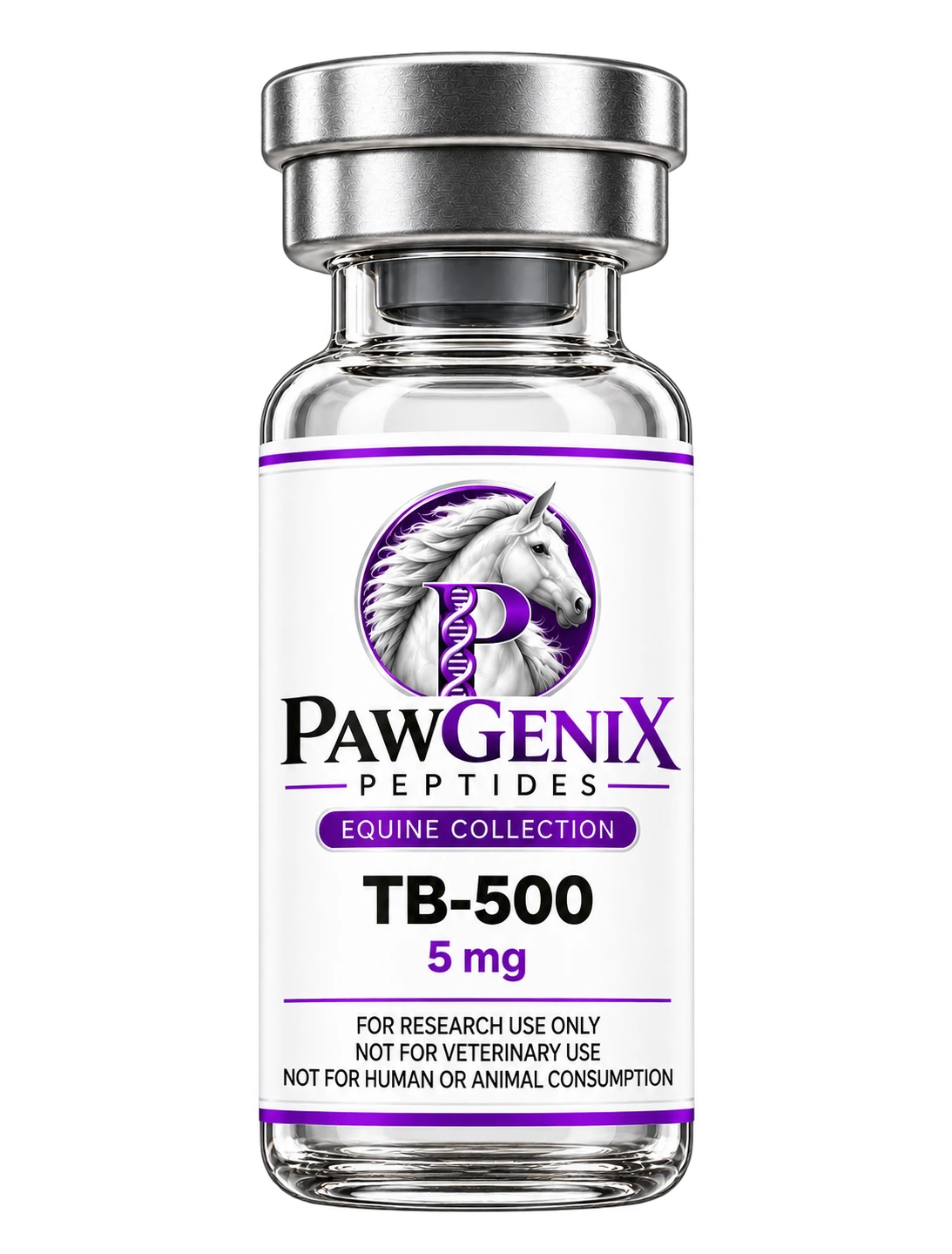
Single peptideTB-500 · 5 mg per vial · Equine collectionEquine collection

Equine collection

TB-500

$50.00Per vial · USD
Per vial · USD$50.00 total
Quantity savingsUp to 8%
View per-vial prices
Your quantity savings · per vial
QuantitySavingsPrice
0%$50.00
3%$48.50
5%$47.50
8%$46.00
Each peptide, strength and collection qualifies separately. Water is excluded. Highest discount applies; no stacking.
Research & product details

Tissue & cell research

TB-500 is a research label associated with thymosin beta-4-related peptides. An equine analytical study identified an acetylated seven-amino-acid fragment, rather than full-length thymosin beta-4.

Functions studied: The fragment described in the equine study corresponds to an actin-related region of thymosin beta-4. Actin is a protein involved in cell structure and movement. Full-length thymosin beta-4 and its fragments are different molecules.

Experimental uses: Laboratory wound assays and mouse skin-wound models investigating TB-500 and its metabolites, plus analytical identification and metabolite detection. Exact sequence and formulation are essential when comparing papers.

Animal research: Experimental mouse skin-wound research has studied TB-500 alongside its metabolite Ac-LK. It does not establish benefits in dogs or horses. A horse study identified the peptide and its breakdown products in urine and plasma; that study did not demonstrate injury recovery, joint benefits, or improved performance.

Definition & research focus
View COA status
RESEARCH AREASIntestinal pathwaysCell & mouse research

Illustrative only. Benefits in dogs or horses are not established. View evidence ↗

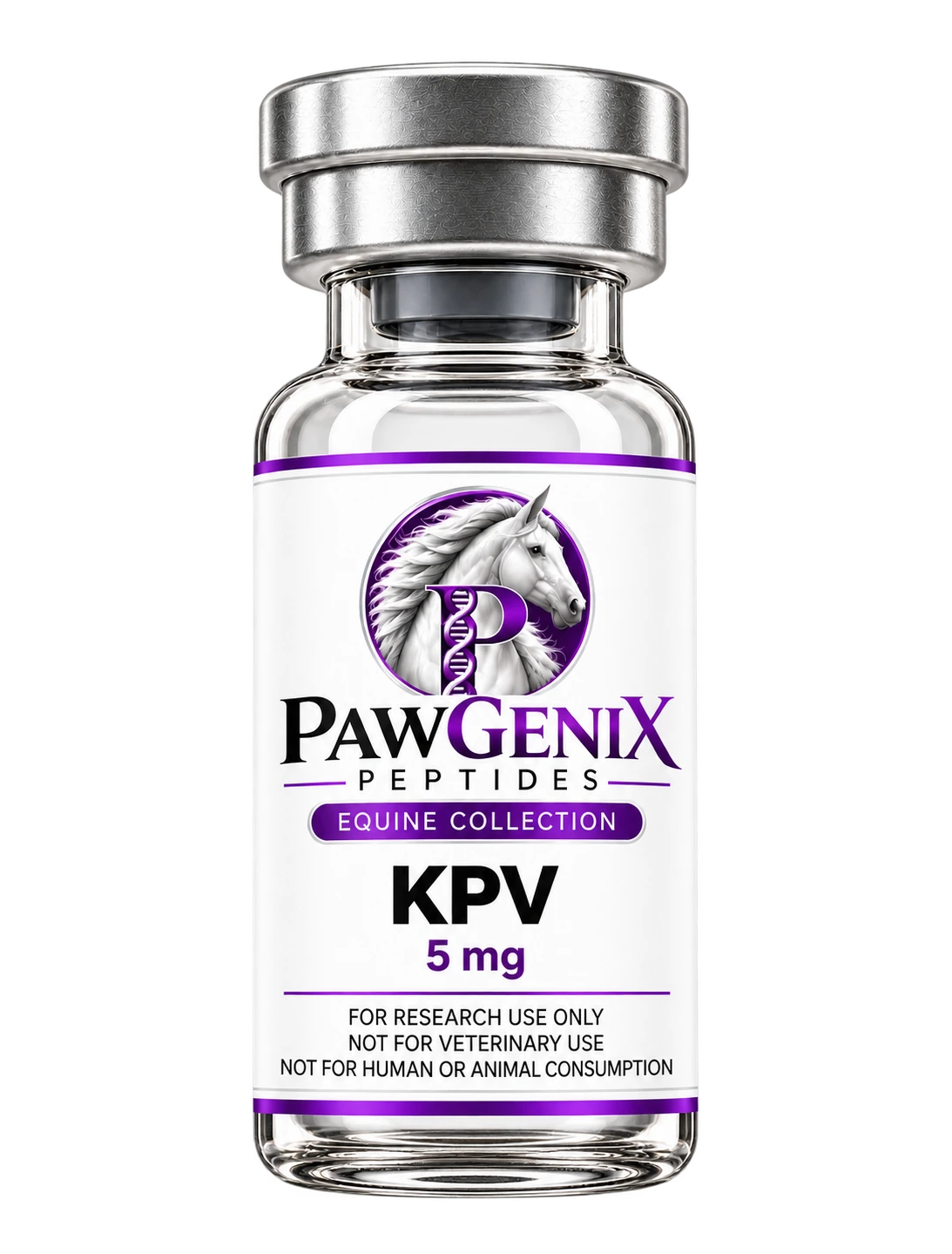
Single peptideKPV · 5 mg per vial · Equine collectionEquine collection

Equine collection

KPV

$55.00Per vial · USD
Per vial · USD$55.00 total
Quantity savingsUp to 8%
View per-vial prices
Your quantity savings · per vial
QuantitySavingsPrice
0%$55.00
3%$53.35
5%$52.25
8%$50.60
Each peptide, strength and collection qualifies separately. Water is excluded. Highest discount applies; no stacking.
Research & product details

Gut & inflammatory signaling

KPV is a three-amino-acid peptide: lysine, proline, and valine. It corresponds to the final three amino acids of alpha-melanocyte-stimulating hormone (alpha-MSH).

Functions studied: A cell study found uptake through the peptide transporter PepT1 and reduced activation of NF-kappaB and MAPK, pathways involved in inflammatory signaling.

Experimental uses: Experimental intestinal inflammation, epithelial-cell responses, and immune-cell signaling research.

Animal research: Original studies examined mouse colitis models alongside laboratory cell experiments. Researchers measured inflammatory signaling, tissue changes, and cytokines. These findings are not established digestive-health uses for dogs or horses.

Definition & research focus
View COA status
RESEARCH AREASSkin · tendons · gutIndividual ingredient research

Illustrative only. Benefits in dogs or horses are not established. View evidence ↗

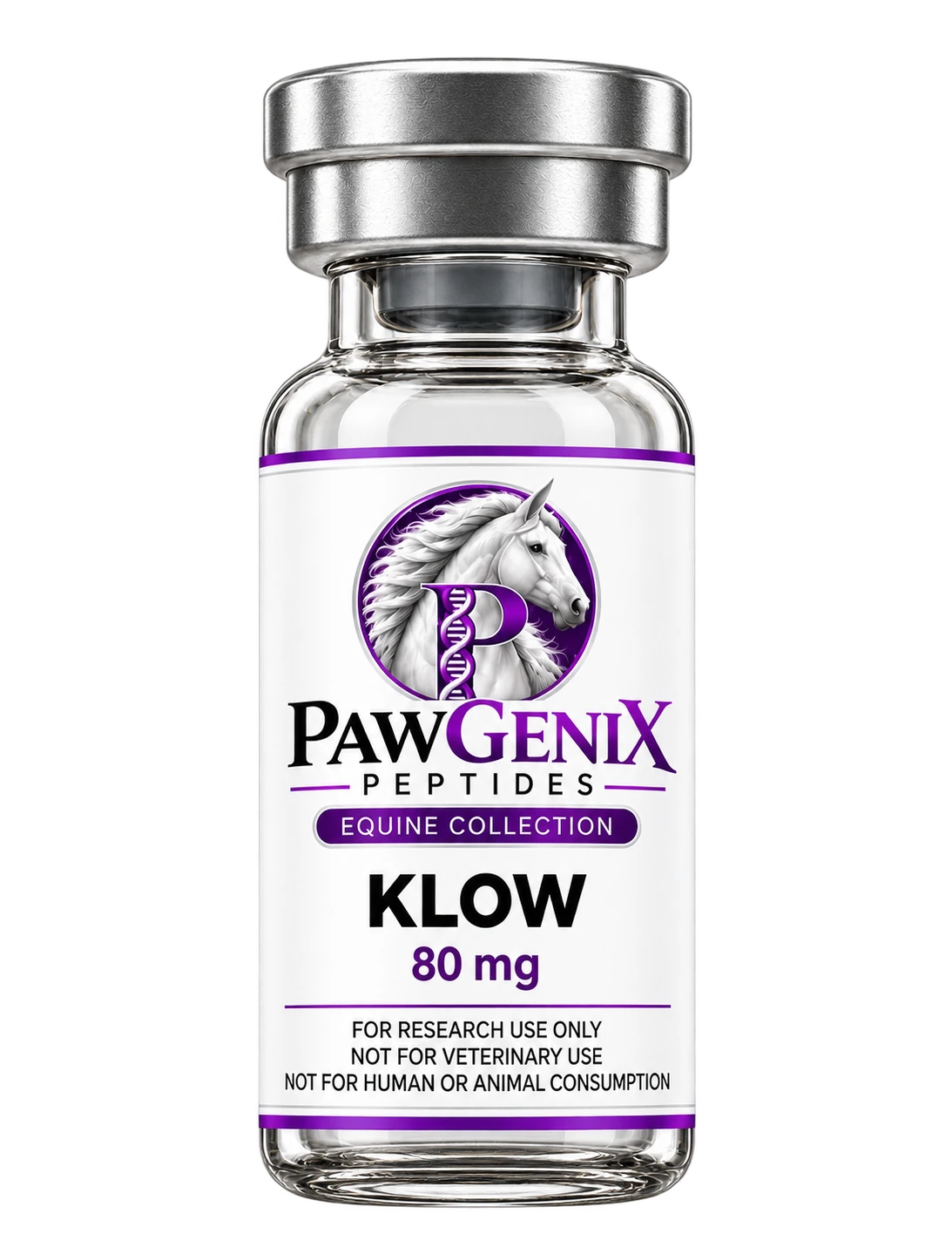
Peptide formulationKLOW · 80 mg per vial · Equine collectionEquine collection

Equine collection

KLOW

BPC-157 10 mg + TB-500 10 mg + GHK-Cu 50 mg + KPV 10 mg

80 mg per vial

$70.00Per vial · USD
Per vial · USD$70.00 total
Quantity savingsUp to 8%
View per-vial prices
Your quantity savings · per vial
QuantitySavingsPrice
0%$70.00
3%$67.90
5%$66.50
8%$64.40
Each peptide, strength and collection qualifies separately. Water is excluded. Highest discount applies; no stacking.
Research & product details

Blends & formulation research

KLOW is a four-peptide formulation. The Pawgenix USA 80 mg edition combines BPC-157 10 mg, TB-500 10 mg, GHK-Cu 50 mg, and KPV 10 mg.

Functions studied: Its four ingredients connect to research on tendon-cell behavior, thymosin-related peptide identity, skin remodeling, and intestinal inflammatory pathways.

Experimental uses: Multi-ingredient formulation research using the stated BPC-157 10 mg, TB-500 10 mg, GHK-Cu 50 mg, and KPV 10 mg composition. No synergistic effect is assumed.

Animal research: The linked studies use different models and individual ingredients. They do not test the combined 80 mg KLOW formulation or establish its effects in dogs or horses.

Definition & research focus
View COA status
RESEARCH AREASSkin & tissue remodelingFormulation-specific research

Illustrative only. Benefits in dogs or horses are not established. View evidence ↗

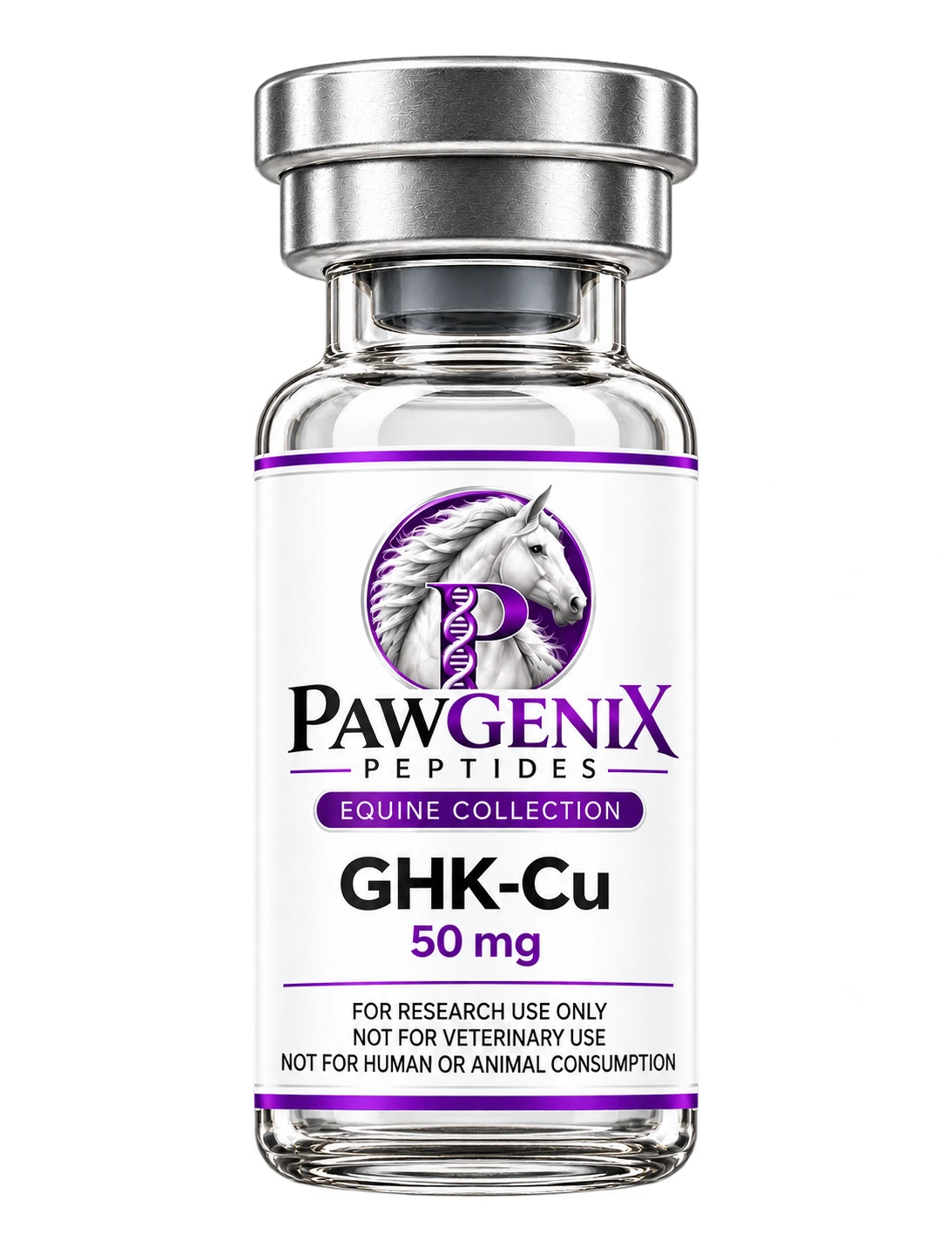
Copper peptideGHK-Cu · 50 mg per vial · Equine collectionEquine collection

Equine collection

GHK-Cu

$45.00Per vial · USD
Per vial · USD$45.00 total
Quantity savingsUp to 8%
View per-vial prices
Your quantity savings · per vial
QuantitySavingsPrice
0%$45.00
3%$43.65
5%$42.75
8%$41.40
Each peptide, strength and collection qualifies separately. Water is excluded. Highest discount applies; no stacking.
Research & product details

Skin & wound biology

GHK-Cu is the copper-bound form of a three-amino-acid peptide made from glycine, histidine, and lysine.

Functions studied: Investigated for connective-tissue remodeling, collagen-related measurements, cell proliferation, and blood-vessel formation in experimental wounds.

Experimental uses: Skin and wound models, biomaterial and formulation research, and studies of extracellular matrix—the material surrounding cells.

Animal research: A 12-dog pad-wound experiment studied a copper tripeptide complex and found more type-I collagen at day 14. This is preparation-specific experimental evidence, not proof of Pawgenix product effects. Studies also include rat experimental wounds and a mouse scald model using a liposome formulation. Findings vary: an irradiated-rat study found no difference in several blood-vessel and wound measures. Formulation and model affect the result.

Definition & research focus
View COA status