A NEW BREED OF PEPTIDE RESEARCH For research use only
PawgenixUSAPEPTIDESRequest an order

EQUINE & CANINE COLLECTIONS

A new breed of
peptide research.

Two species. One bold vision. Meet Pawgenix USA—peptide collections specially formulated for canine and equine research, with a distinctive identity for dogs and horses.

Specially formulated for canine & equine research. Discover the Pawgenix USA collection.

Consult your veterinarian about your dog’s health, dosing, and treatment protocols.

7 PEPTIDE LINES26 COLLECTION EDITIONSEQUINE & CANINE
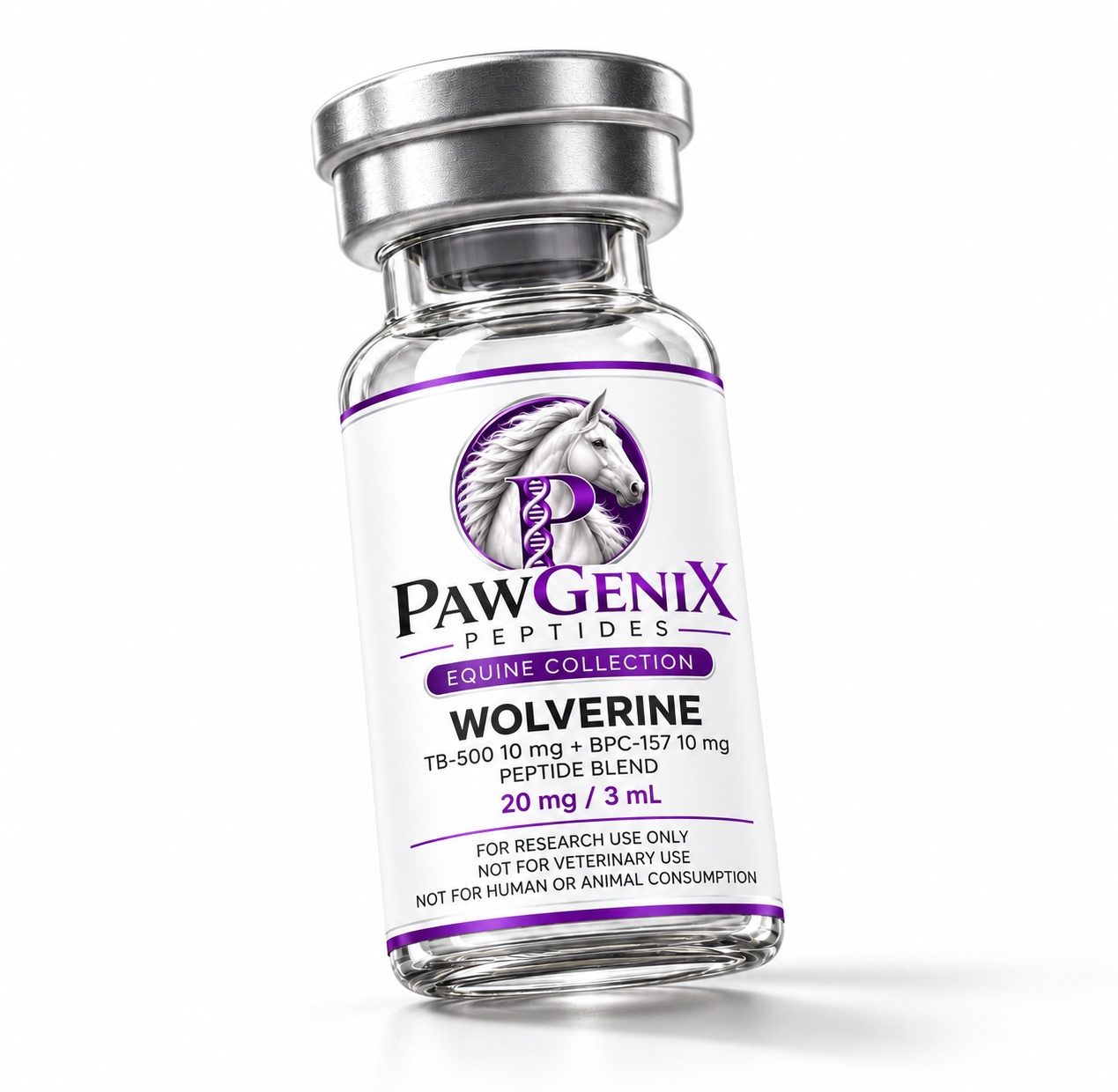
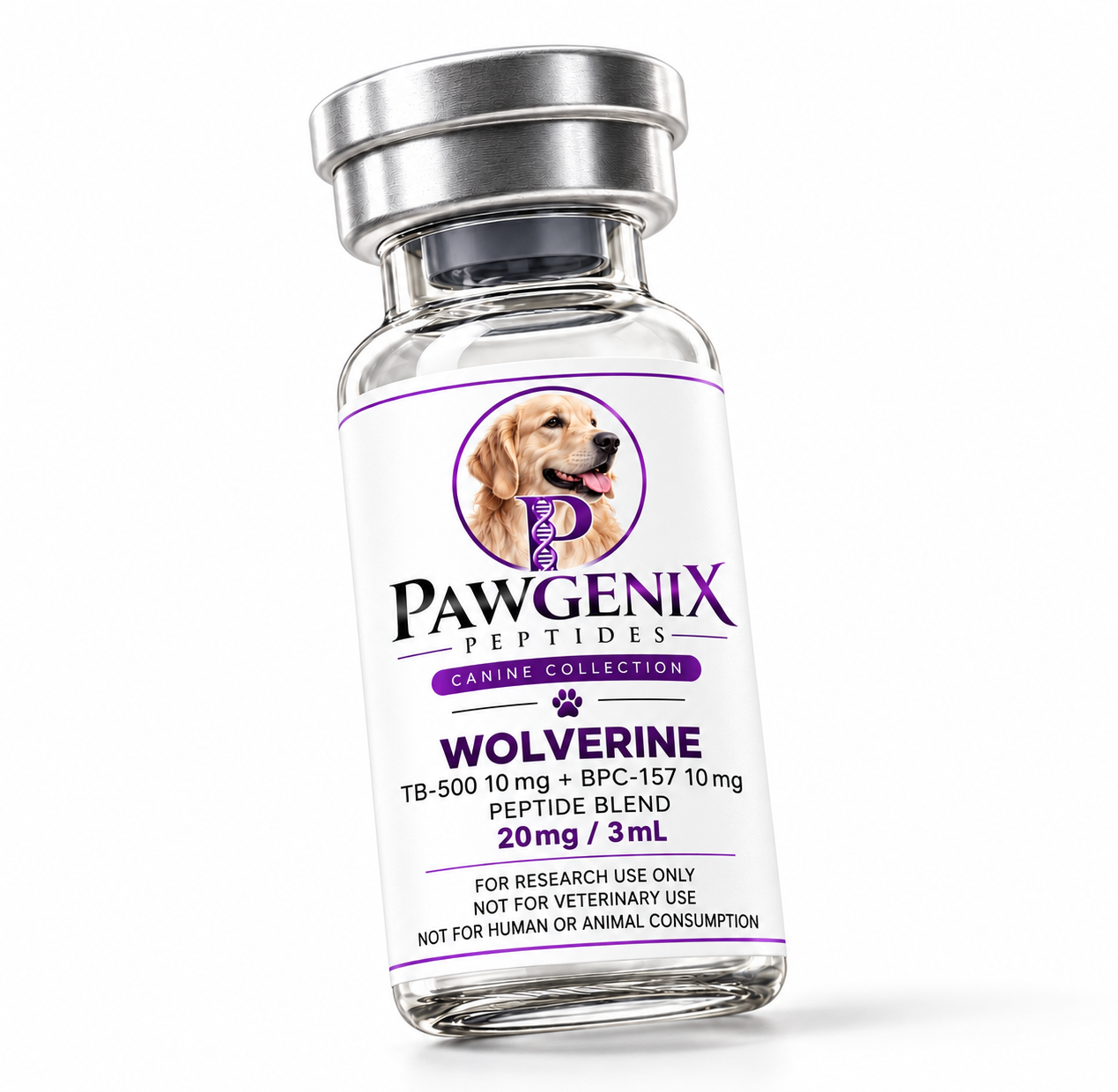
White Pawgenix USA canine Wolverine vial with purple branding
IN THE SPOTLIGHTWolverine

TB-500 + BPC-157
20 mg / 3 mL

$80 per vial
Pawgenix USA equine emblemEquine & canine
One Pawgenix USA.

Two focused collectionsEquine & canine identities

Single peptides & blendsSeven distinct product lines

Clear product informationIngredients and labeled amounts

Research use onlyNot for veterinary use

THE PAWGENIX USA CATALOG

Explore the range.
Find your research focus.

Seven peptide lines. Multiple strengths.
Two unmistakable Pawgenix USA collections.

28 products
Pawgenix USA white horse emblem

EQUINE COLLECTION

Commanding by nature.

A distinct research collection with the unmistakable Pawgenix USA horse identity.

Explore horses
Pawgenix USA golden retriever emblem

CANINE COLLECTION

Signature by design.

Specially formulated for canine & equine research. Discover the Pawgenix USA collection. For research use only. Not for human consumption.

Consult your veterinarian about your dog’s health, dosing, and treatment protocols. Pawgenix USA research products are not for veterinary use or administration to animals.

Explore dogs

KNOW WHAT’S INSIDE

A closer look.
A clearer choice.

Wolverine Canine collection product presentation

Canine collection

Wolverine

20 mg / 3 mL

Two peptides. One distinctive blend. Wolverine pairs TB-500 10 mg and BPC-157 10 mg in the canine research collection, with a labeled total of 20 mg / 3 mL.

Composition
TB-500 10 mg + BPC-157 10 mg
Product type
Peptide blend
Collection
Dog / Canine
Price per vial
$80.00
Shop the collection

FOR RESEARCH USE ONLY. NOT FOR VETERINARY USE. NOT FOR HUMAN OR ANIMAL CONSUMPTION.

THE PRODUCT GUIDE

Clear labels.
Informed research.

Start with the details that distinguish each offering.

01

Single peptide or blend?

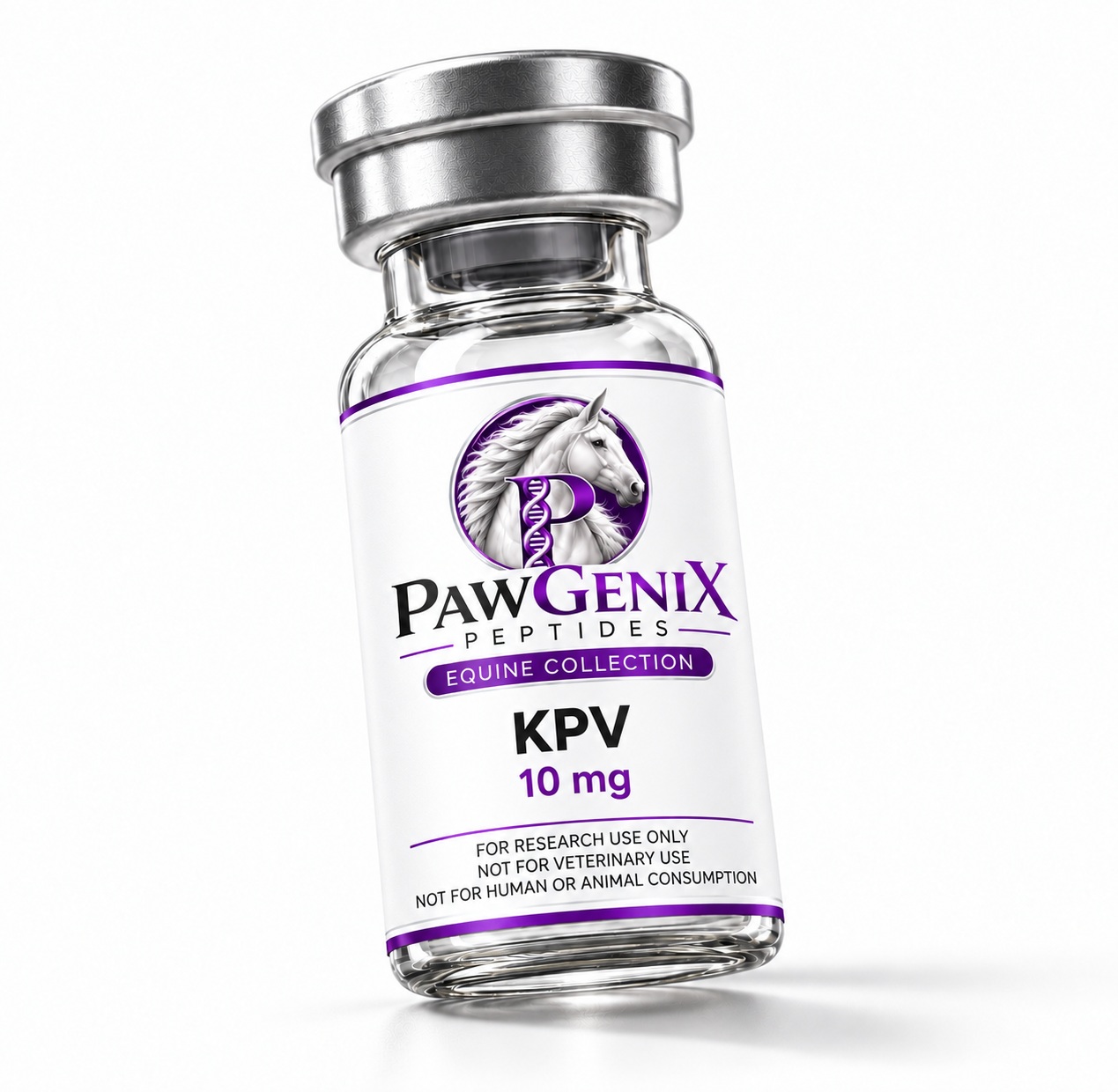
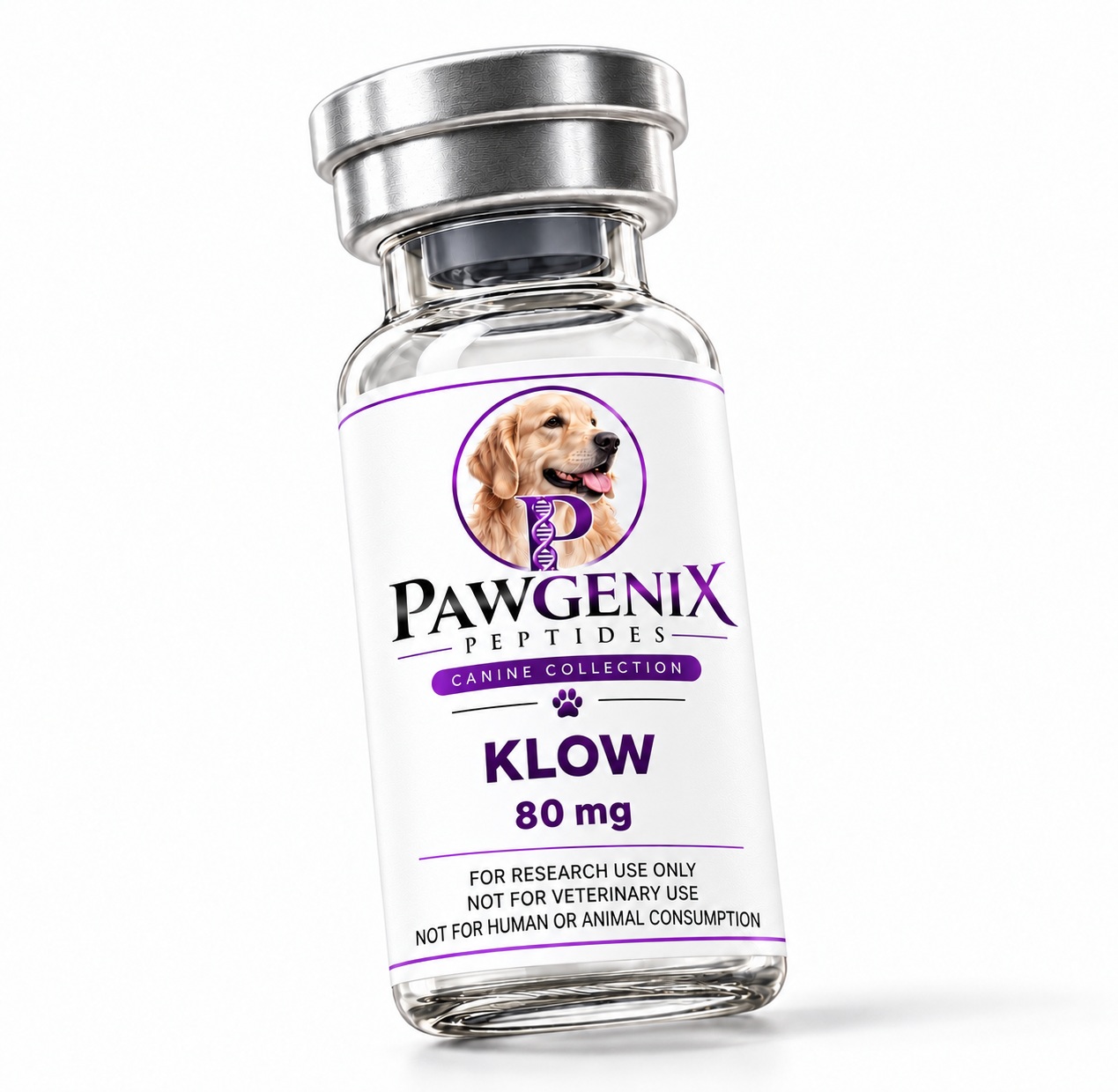
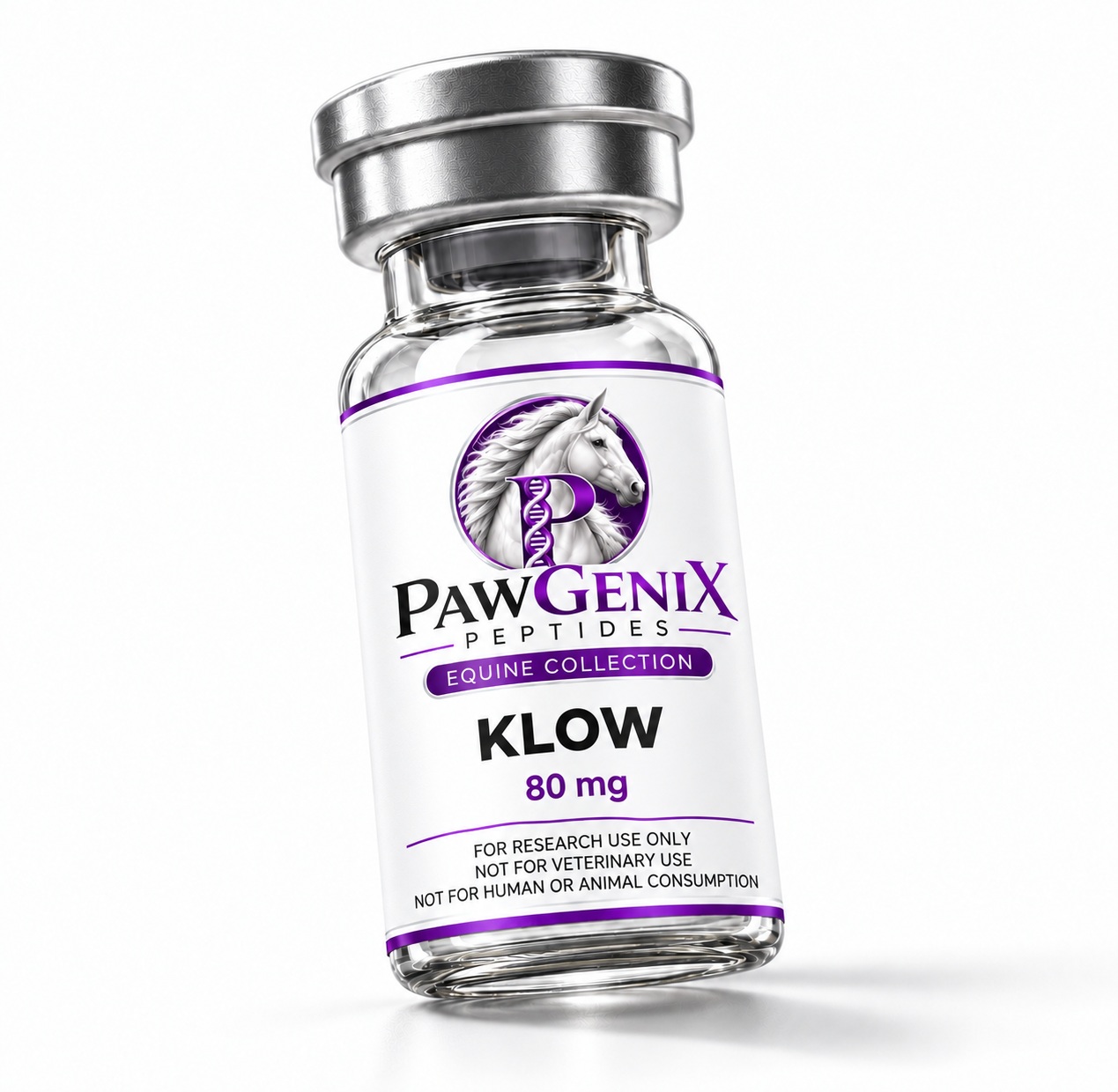
Browse ARA 290, BPC-157, TB-500, KPV, and GHK-Cu in multiple strengths. Wolverine 20 mg combines TB-500 and BPC-157; the 10 mg blend’s component amounts are to be confirmed. KLOW 80 mg combines BPC-157 10 mg, TB-500 10 mg, GHK-Cu 50 mg, and KPV 10 mg.

02

Read the labeled amounts.

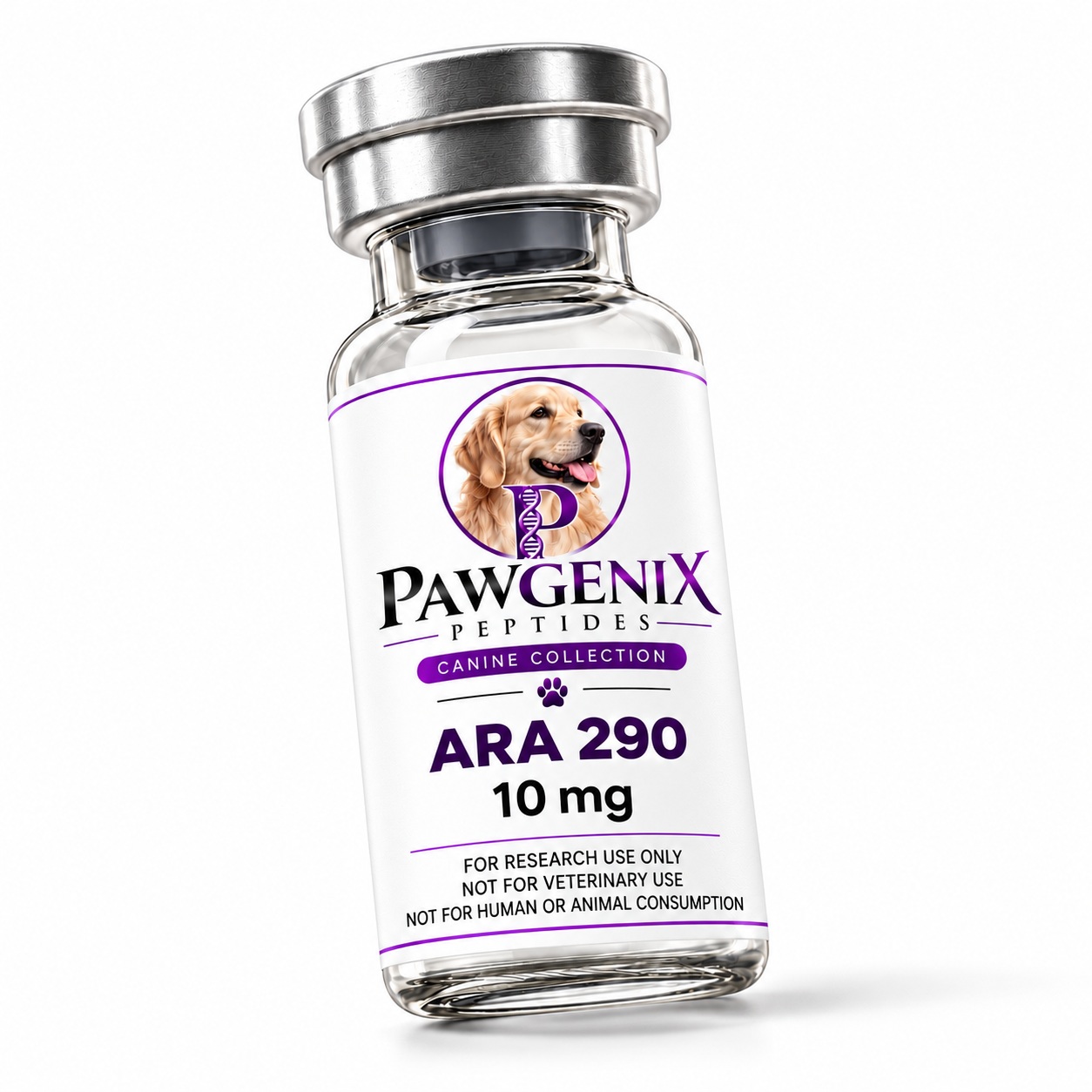
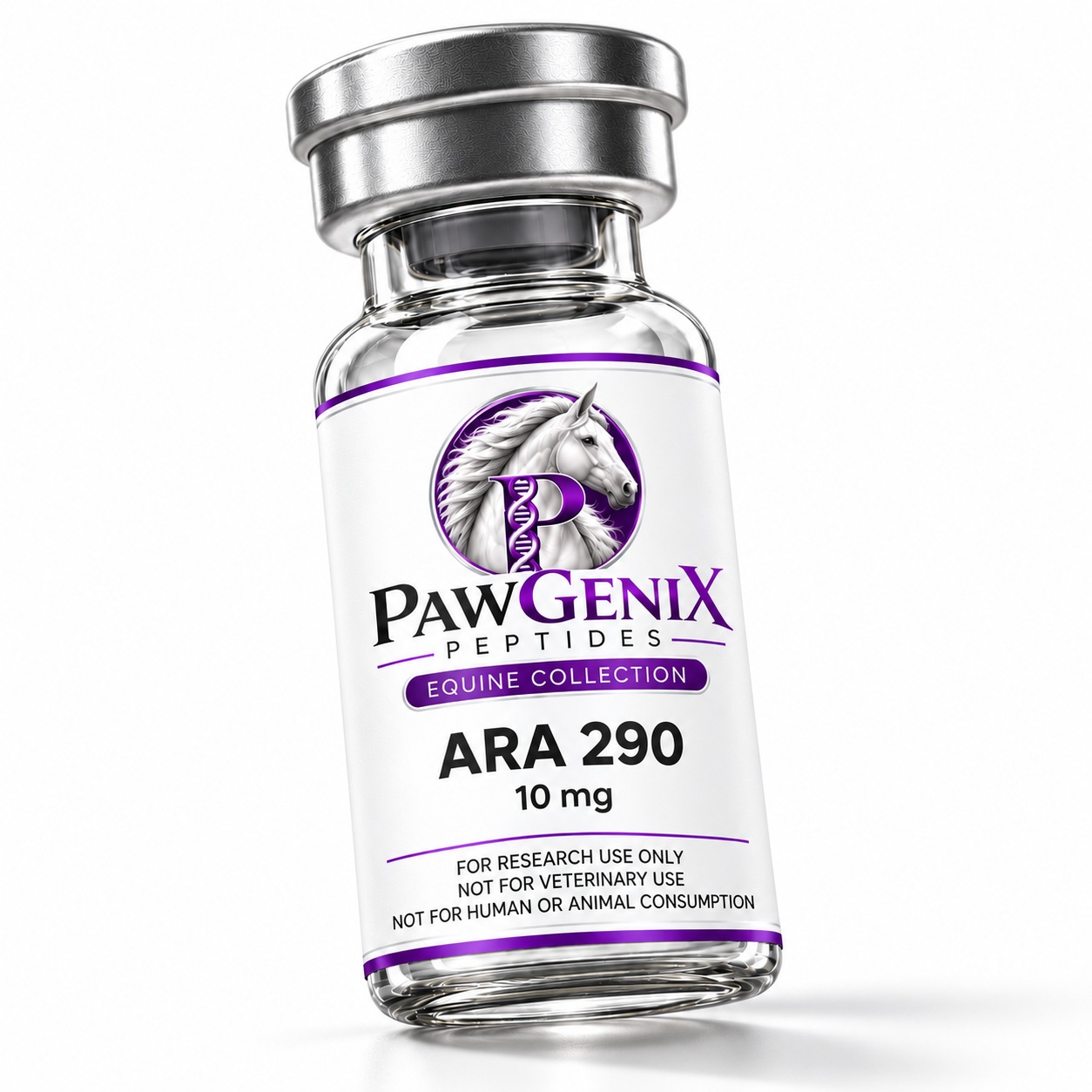
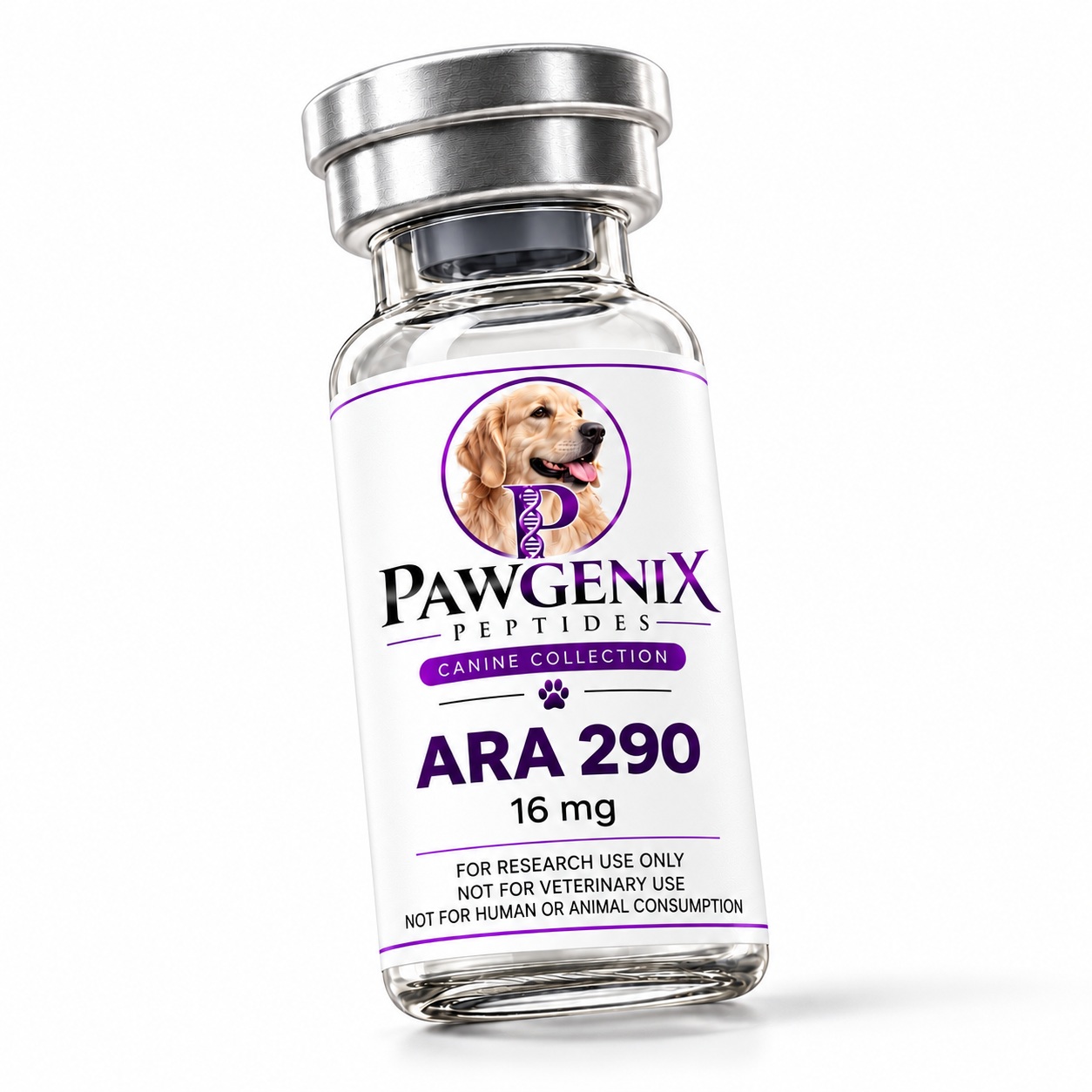
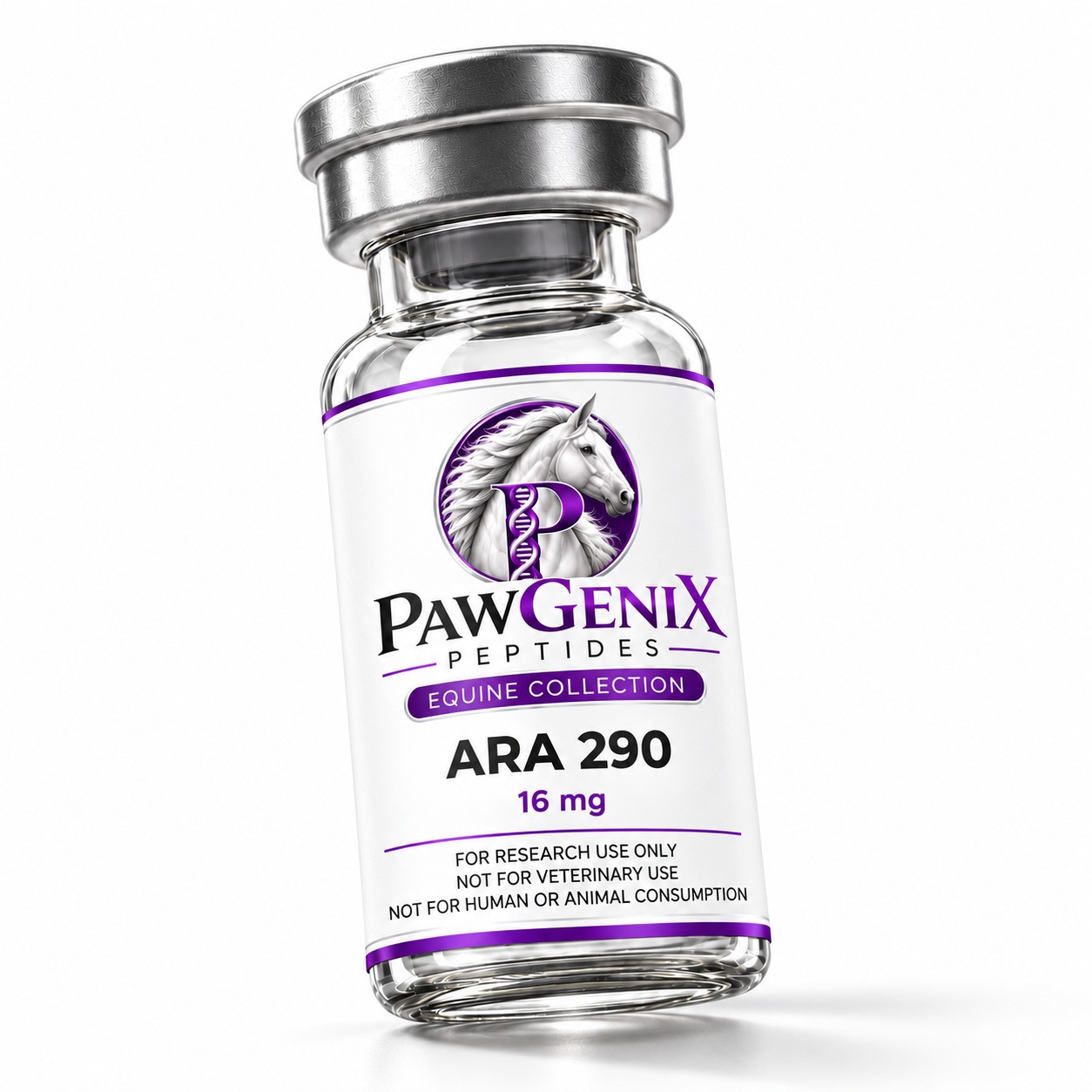
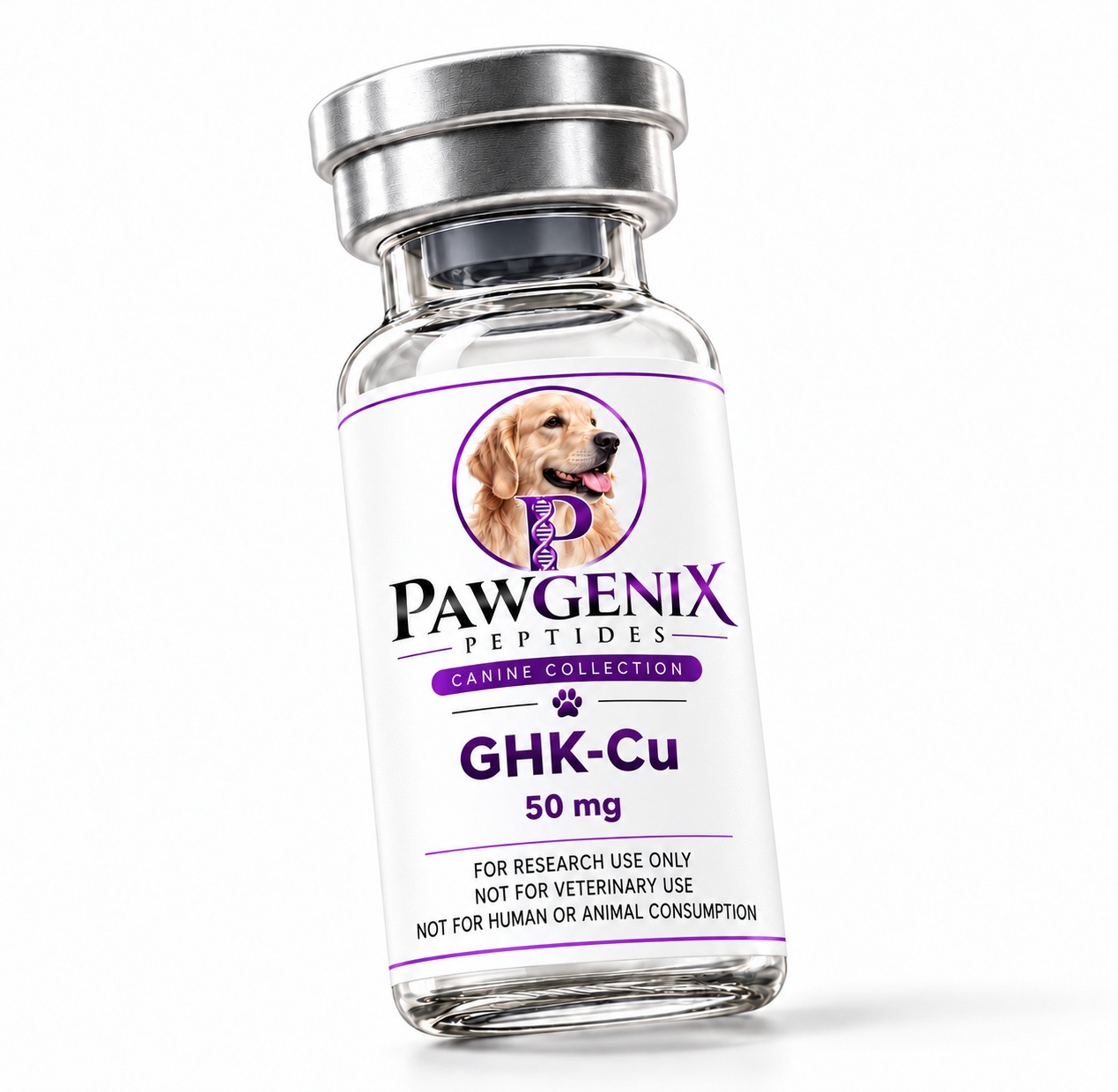
ARA 290 comes in 10 and 16 mg; BPC-157, TB-500, and KPV in 5 and 10 mg; GHK-Cu in 50 and 100 mg; and KLOW in 80 mg. These are product specifications, not dosage instructions.

03

Choose a research collection.

Horse and dog identify the equine and canine branding collections. All Pawgenix USA offerings are for research use only, not veterinary use or human or animal consumption.

THE PEPTIDE FIELD GUIDE

Know the molecule.
Understand the question.

Definitions, biological functions, and experimental applications for every Pawgenix USA peptide. Both peptide collections share these educational descriptions; research supplies are listed separately.

Categories describe subjects studied in research, not approved veterinary uses or treatment recommendations. Labeled amounts are product specifications, not doses.

Tissue & cell research

Tissue & cell research

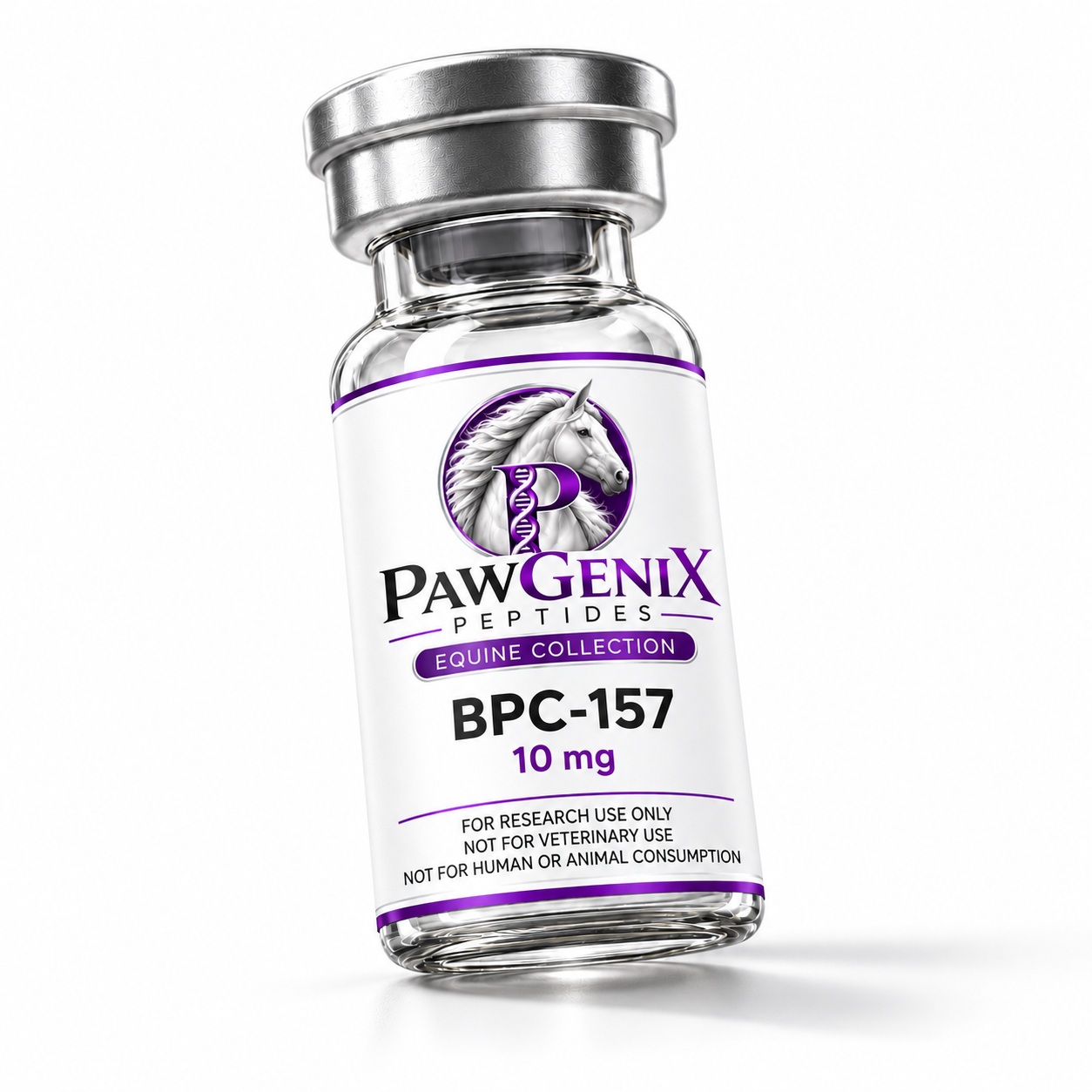
BPC-157

BPC-157 is an experimental 15-amino-acid peptide whose sequence is described as part of a body protection compound identified in human gastric juice.

Research focus
Tendon-cell migration, cell survival, and tissue outgrowth in experimental models.
Biological functions studied
Researchers study how tendon cells move, survive stress, and organize during tissue outgrowth. Its biological mechanisms remain under investigation.
Experimental uses
Tendon and soft-tissue repair models, plus pharmacokinetic research on absorption, breakdown, distribution, and elimination.
Animal research
Tendon research includes rat tissue and cells. A separate 2022 study used rats and beagle dogs to examine pharmacokinetics. The dog study measured how the compound moves through the body, rather than recovery from a clinical injury.
Pawgenix USA editions
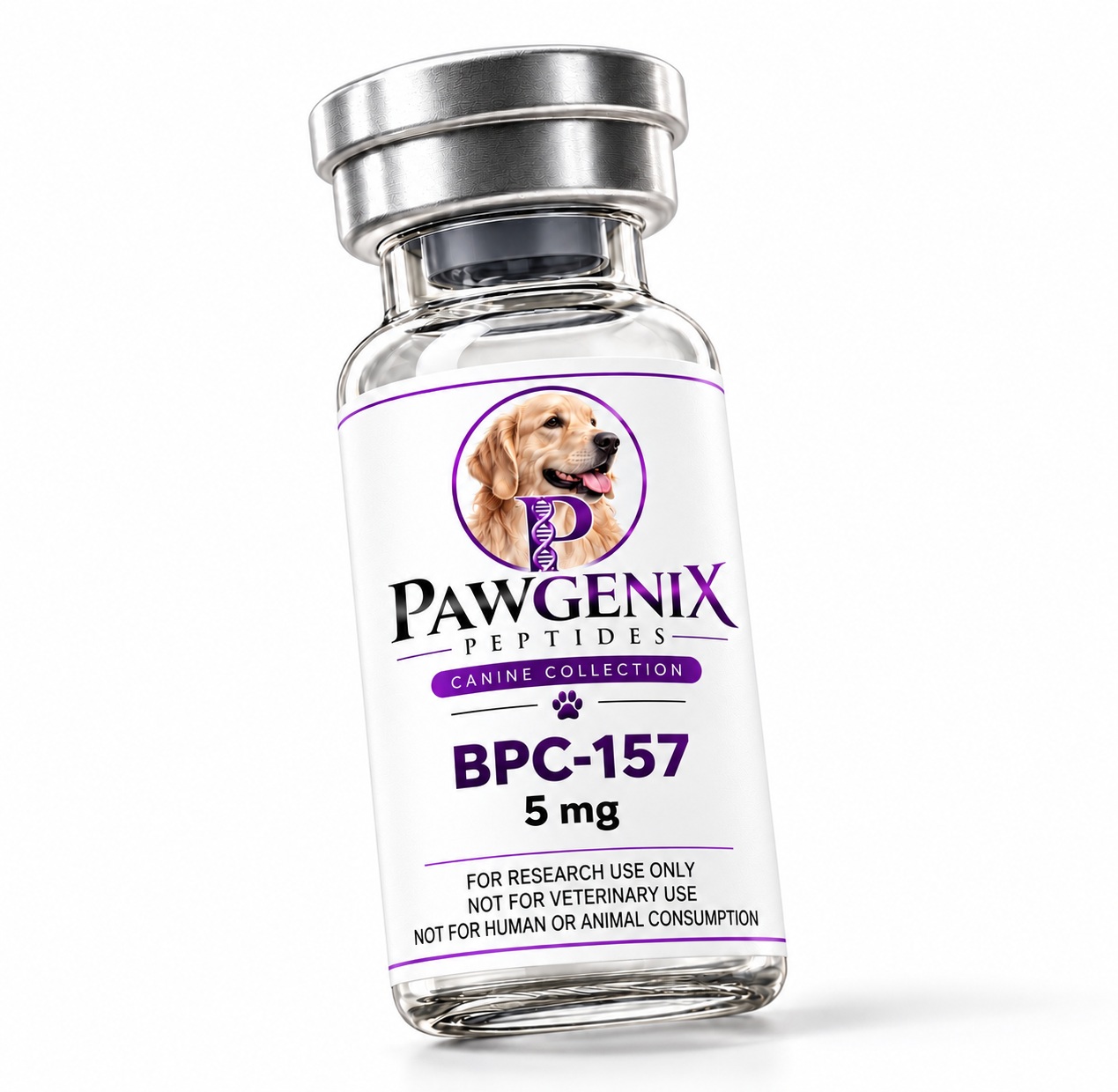
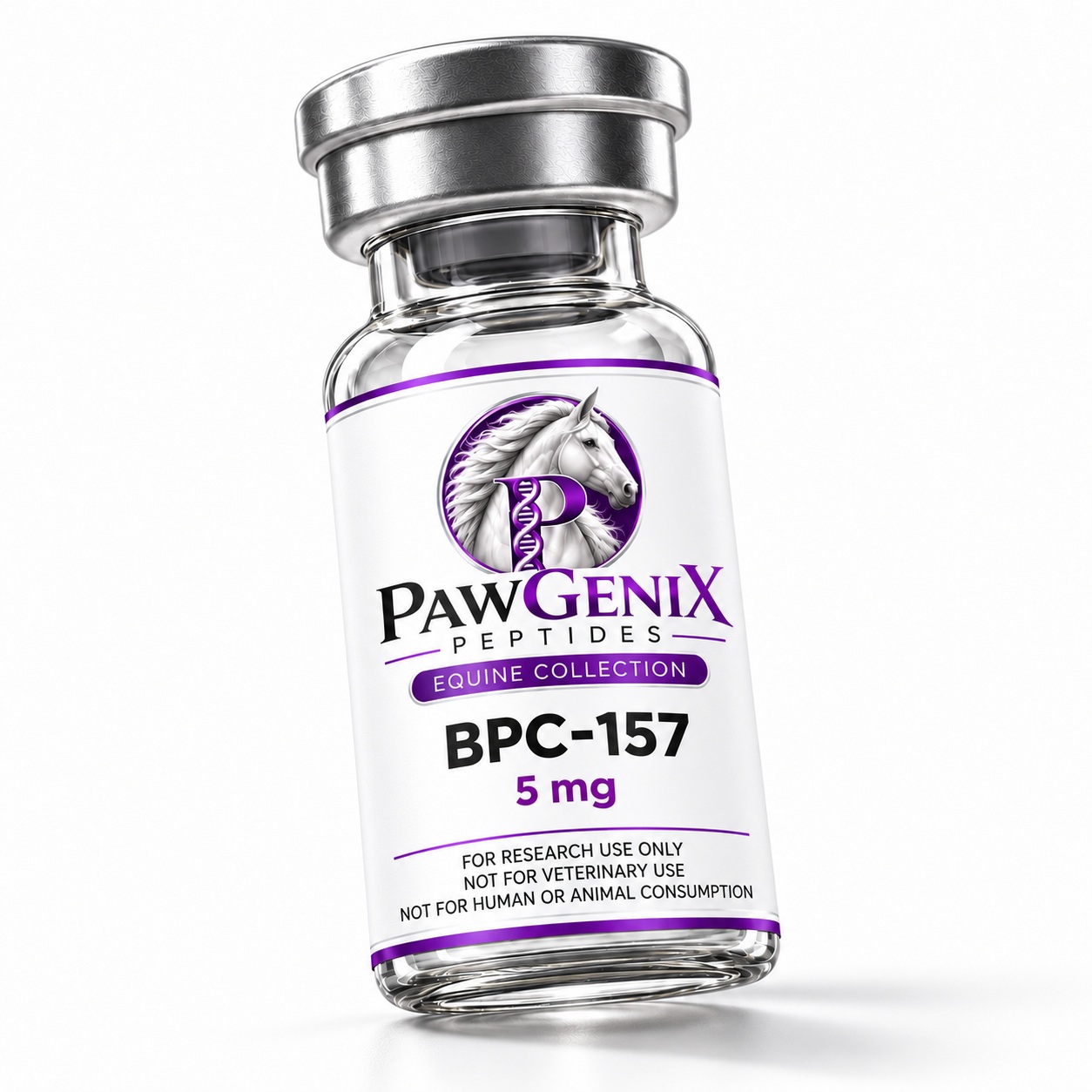
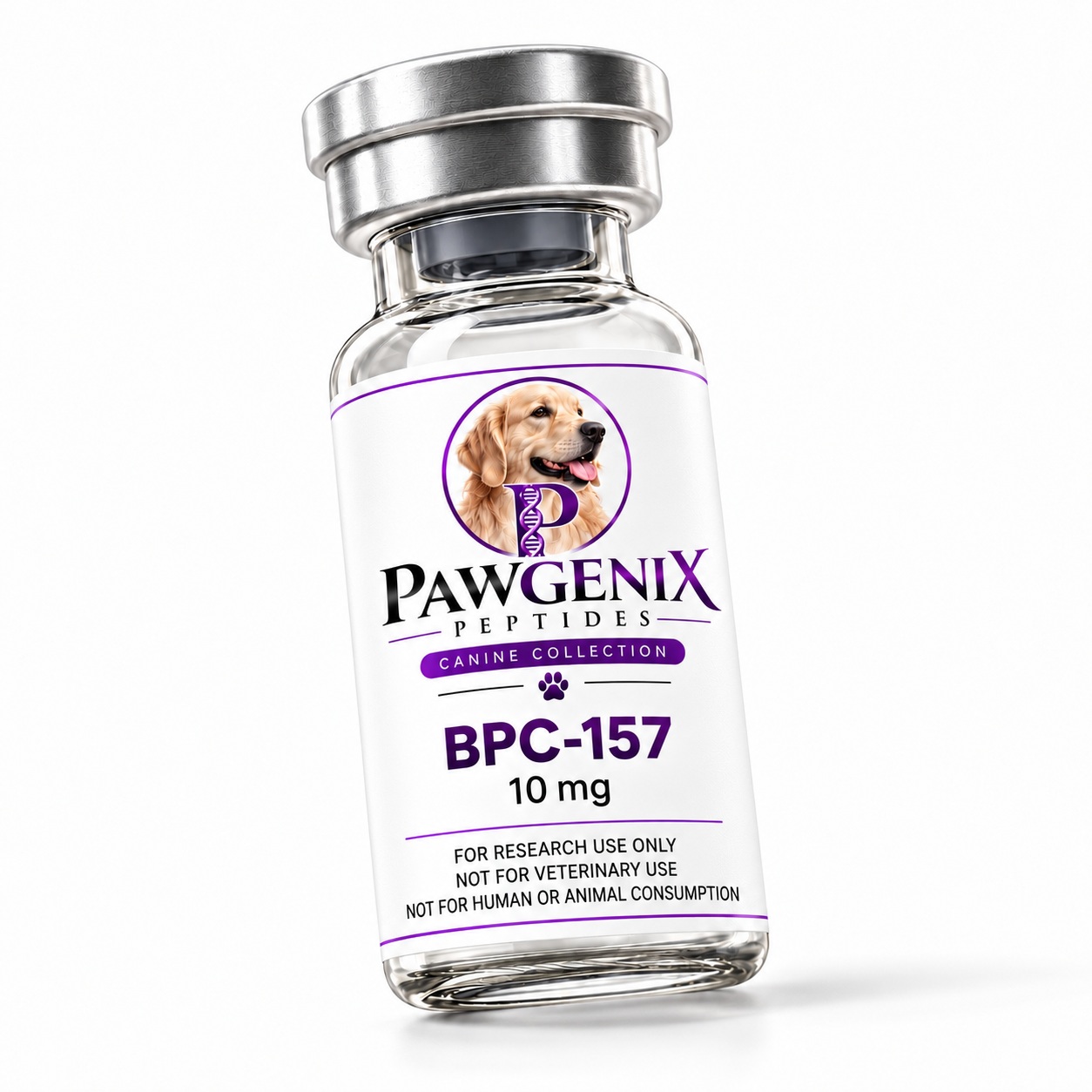
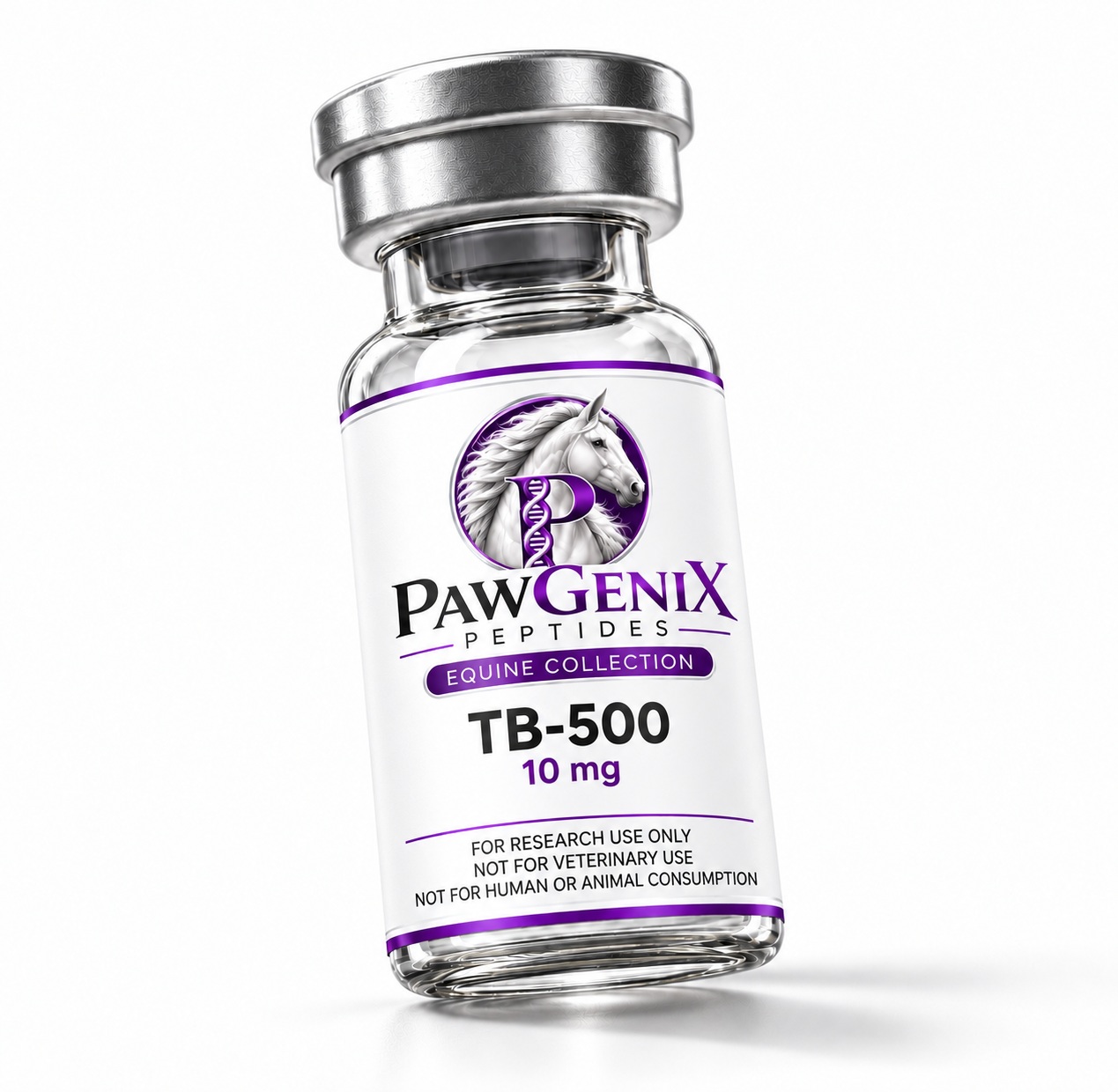
5 mg · 10 mg
Explore collection editions

Tissue & cell research

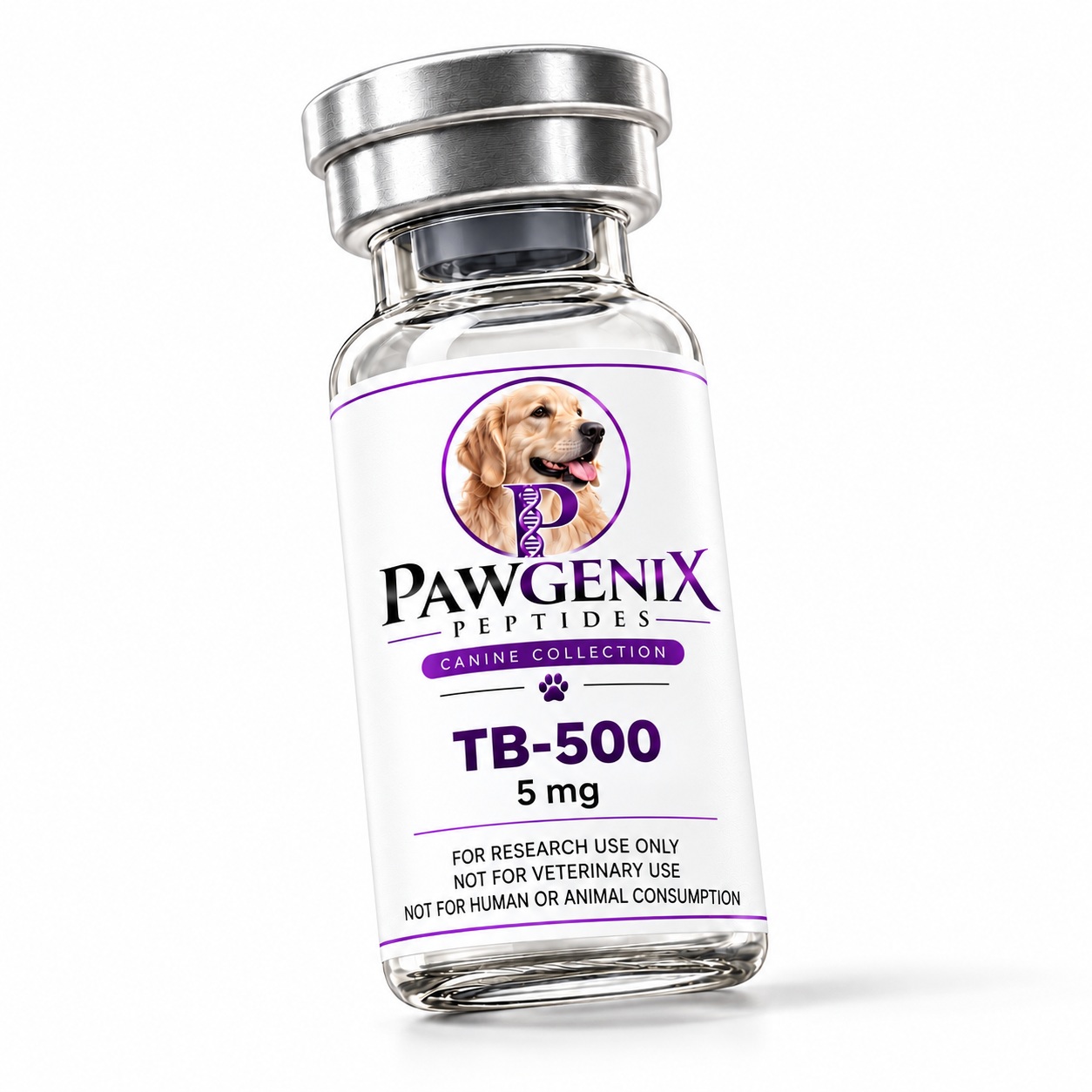
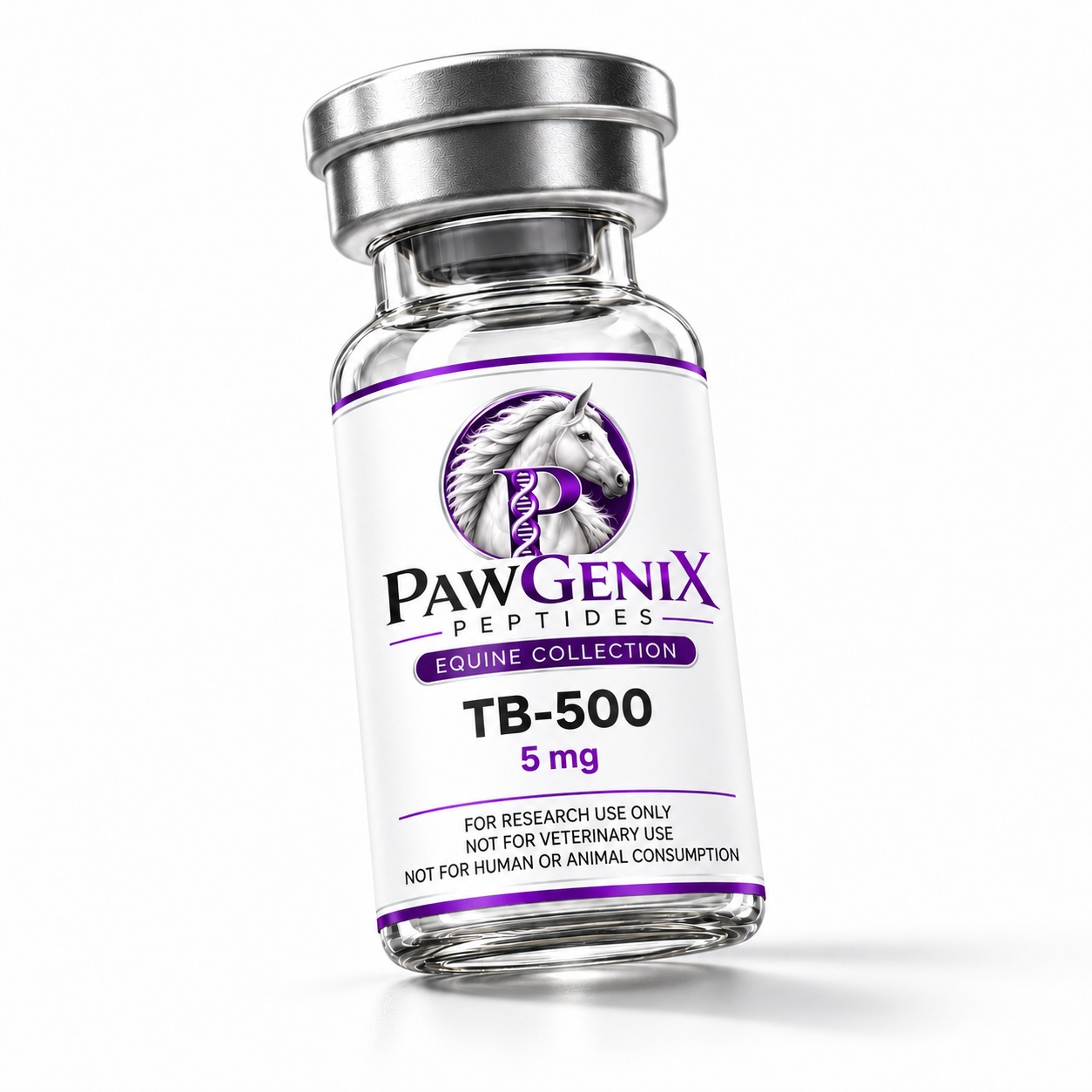
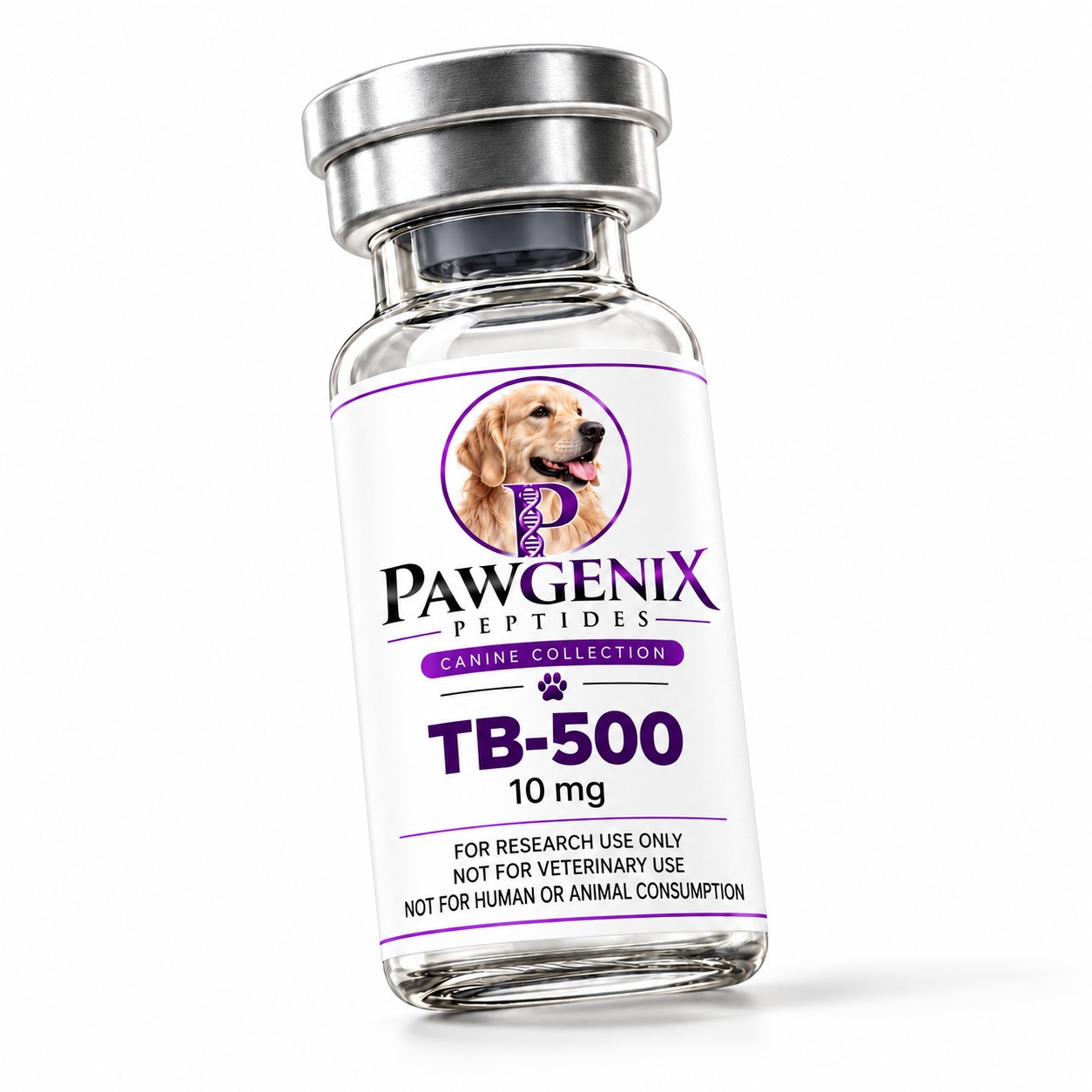
TB-500

TB-500 is a research label associated with thymosin beta-4-related peptides. An equine analytical study identified an acetylated seven-amino-acid fragment, rather than full-length thymosin beta-4.

Research focus
Peptide identity and detection; cell-migration and actin-related questions in the broader thymosin literature.
Biological functions studied
The fragment described in the equine study corresponds to an actin-related region of thymosin beta-4. Actin is a protein involved in cell structure and movement. Full-length thymosin beta-4 and its fragments are different molecules.
Experimental uses
Analytical identification, metabolite detection, and investigation of thymosin-related cell biology. Exact sequence is essential when comparing papers.
Animal research
A horse study identified an acetylated seven-amino-acid fragment and its breakdown products in urine and plasma. It developed a detection method; it did not demonstrate injury recovery, joint benefits, or improved performance.
Pawgenix USA editions
5 mg · 10 mg
Explore collection editions

Gut & inflammatory signaling

Gut & inflammatory signaling

KPV

KPV is a three-amino-acid peptide: lysine, proline, and valine. It corresponds to the final three amino acids of alpha-melanocyte-stimulating hormone (alpha-MSH).

Research focus
Intestinal inflammation and inflammatory-response pathways in preclinical models.
Biological functions studied
A cell study found uptake through the peptide transporter PepT1 and reduced activation of NF-kappaB and MAPK, pathways involved in inflammatory signaling.
Experimental uses
Experimental intestinal inflammation, epithelial-cell responses, and immune-cell signaling research.
Animal research
Original studies examined mouse colitis models alongside laboratory cell experiments. Researchers measured inflammatory signaling, tissue changes, and cytokines. These findings are not established digestive-health uses for dogs or horses.
Pawgenix USA editions
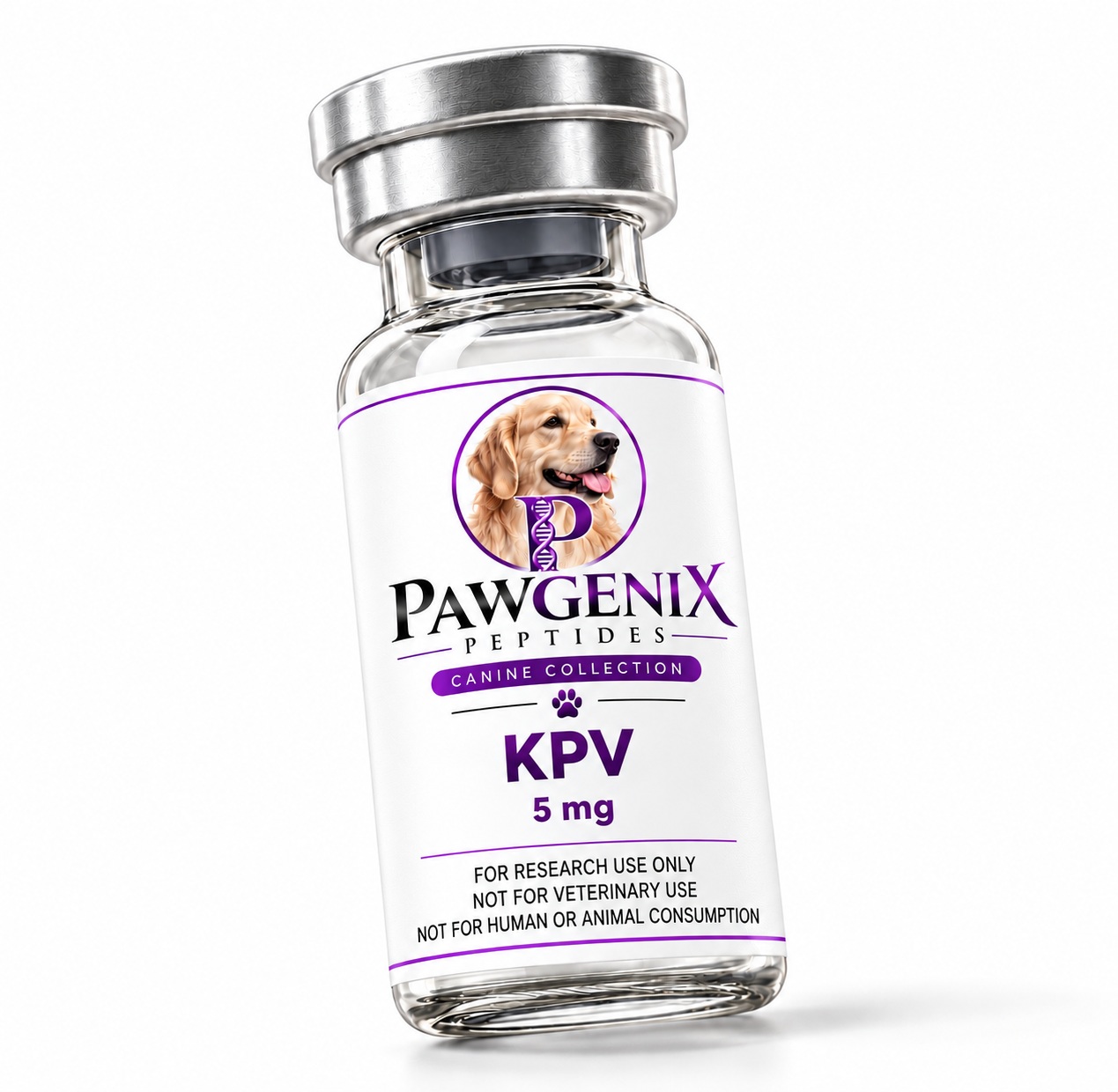
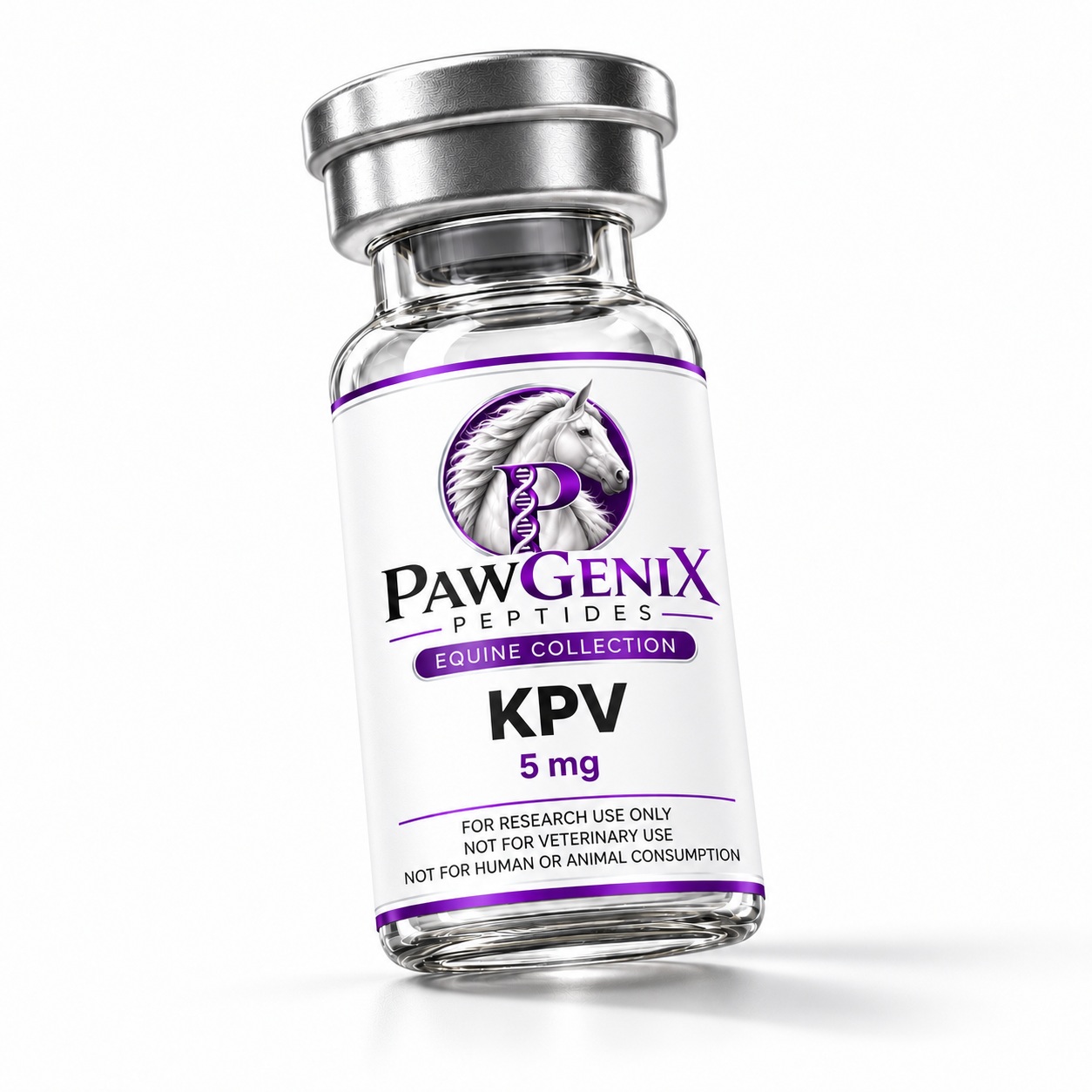
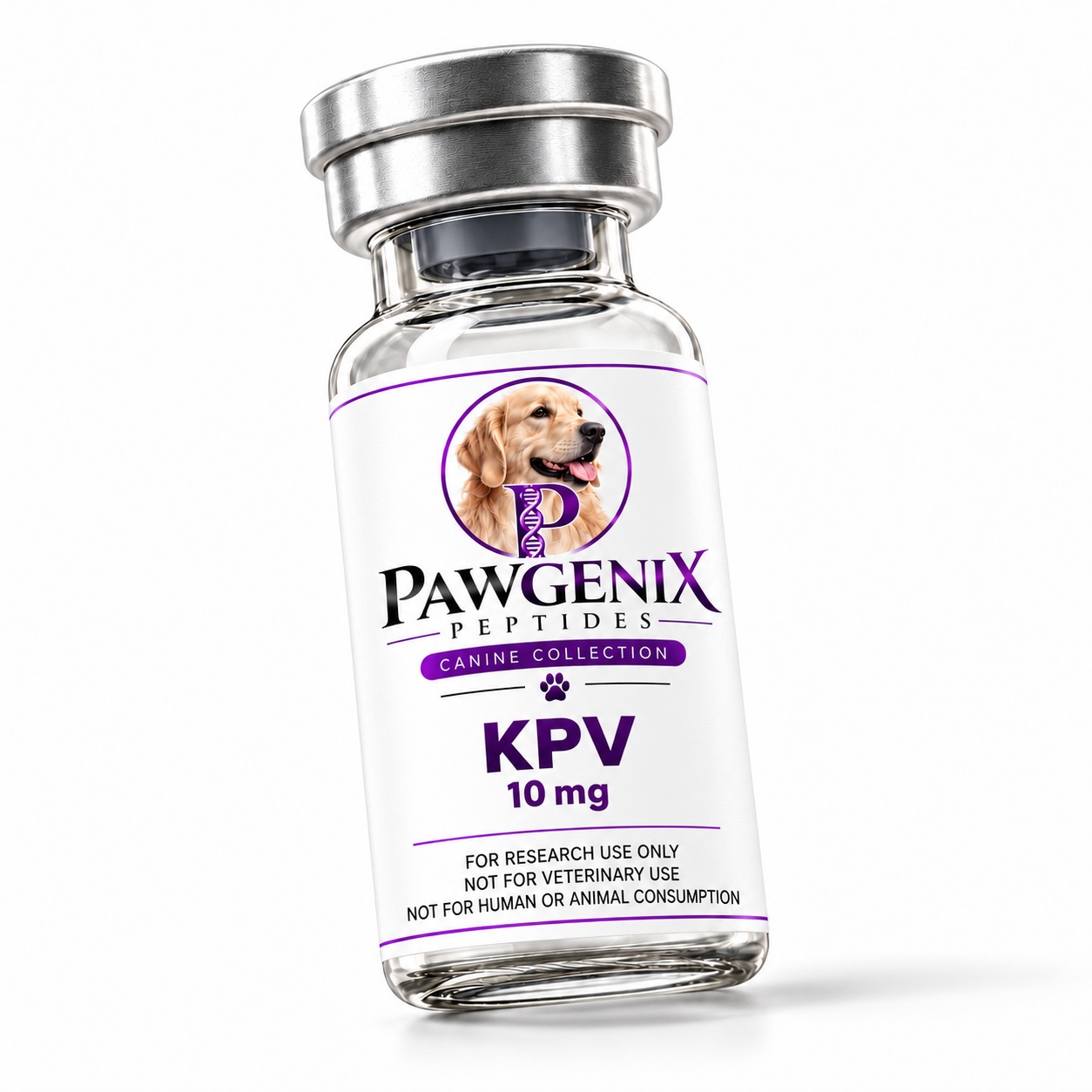
5 mg · 10 mg
Explore collection editions

Skin & wound biology

Skin & wound biology

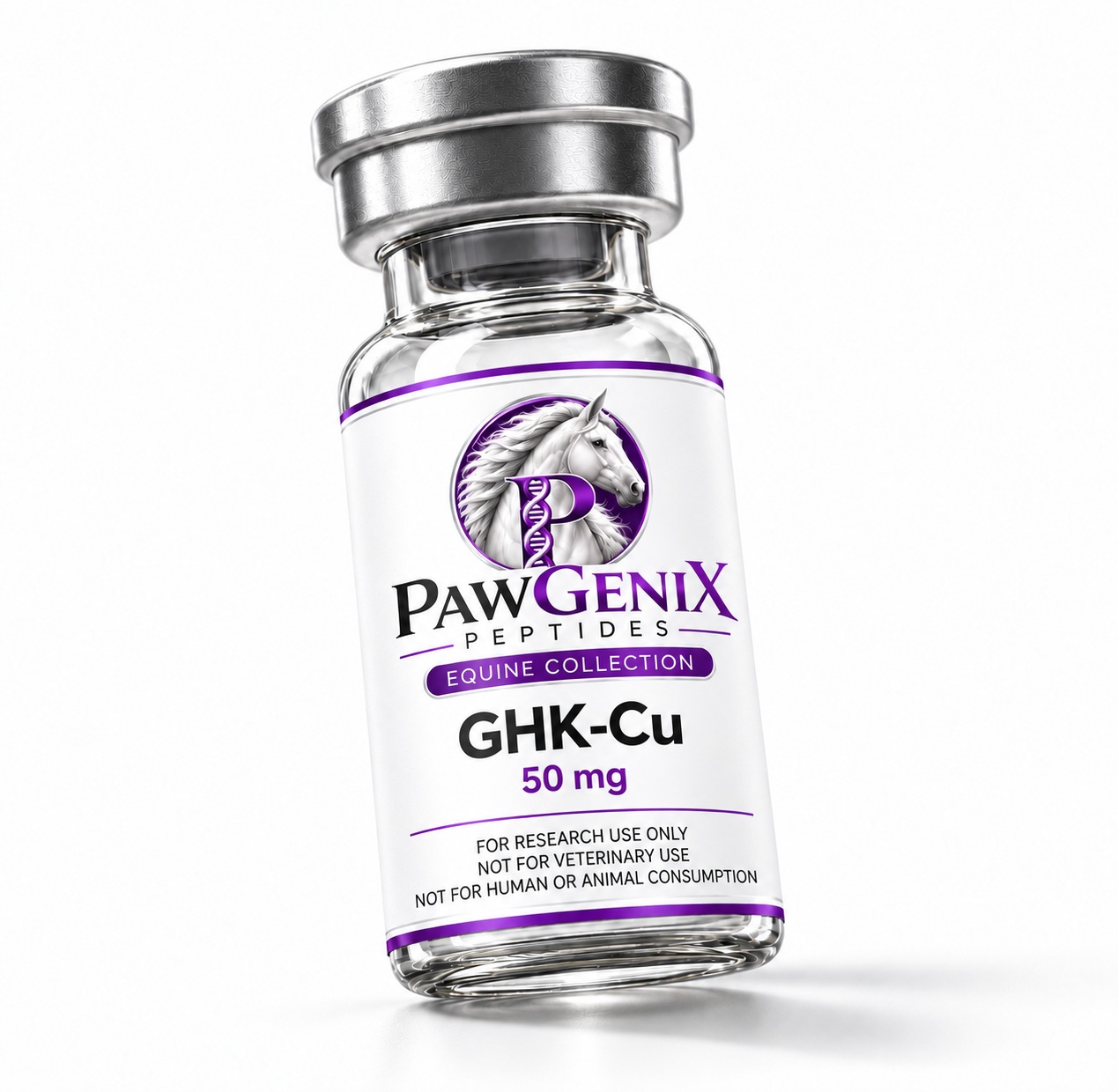
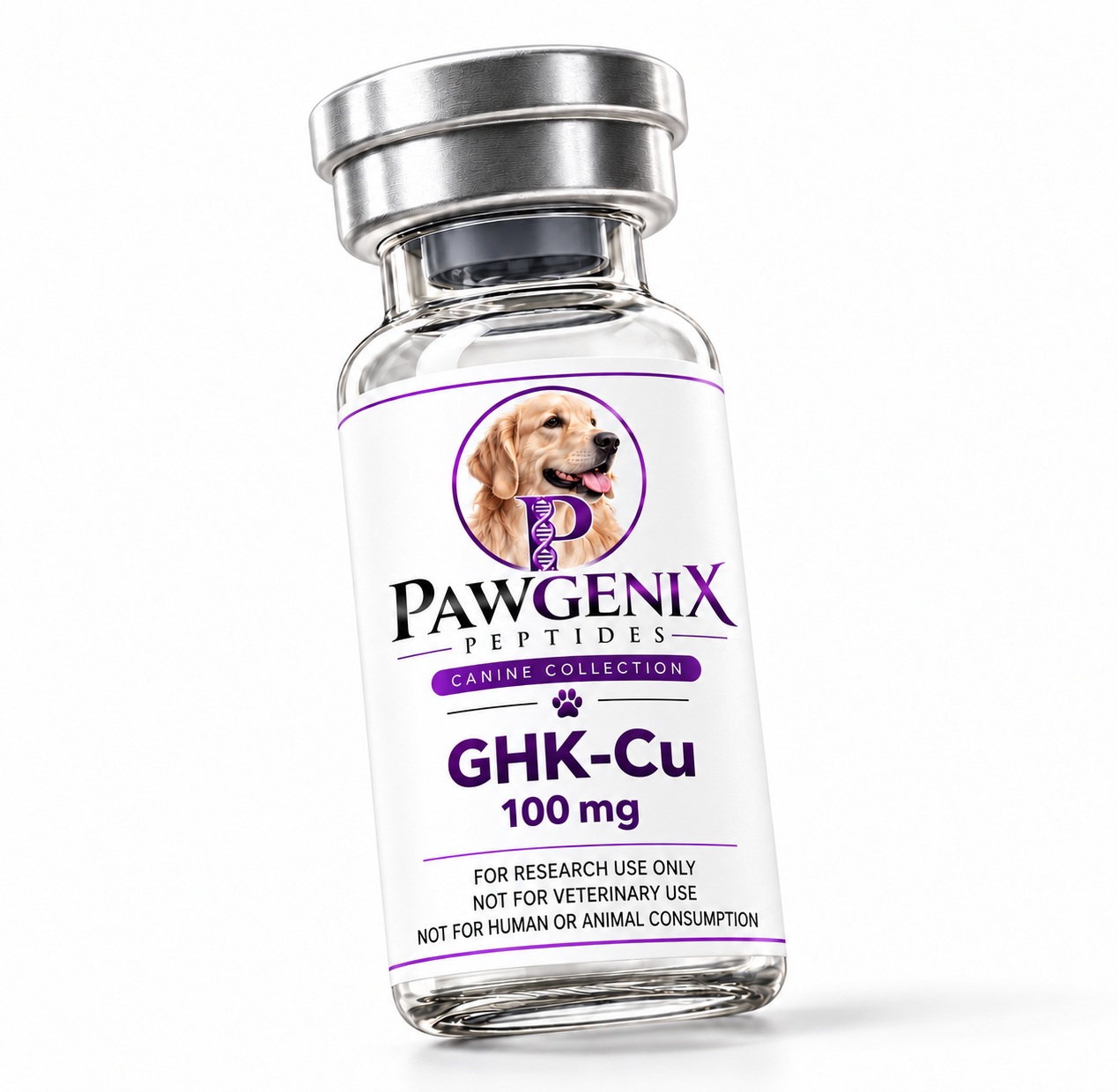
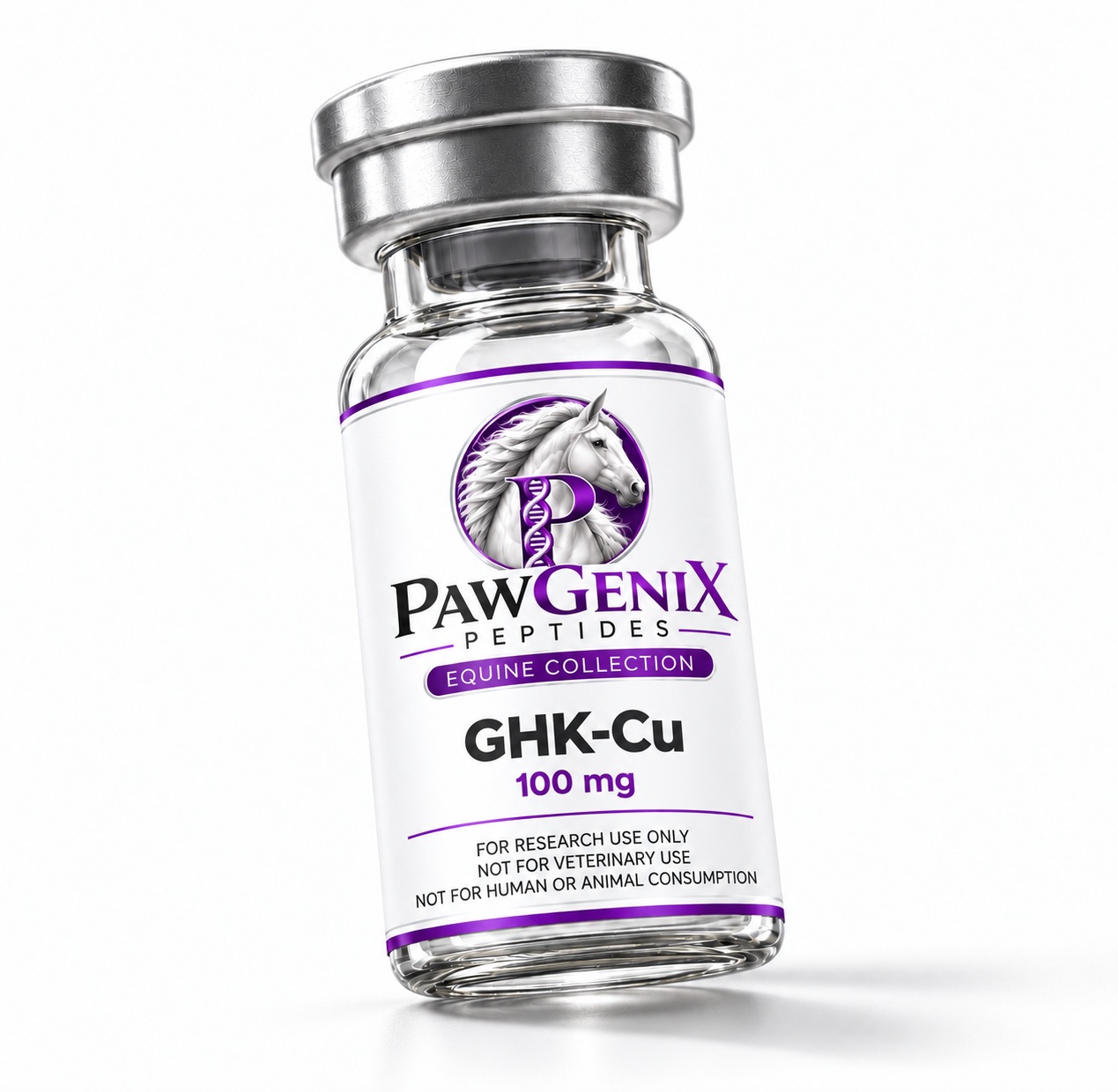
GHK-Cu

GHK-Cu is the copper-bound form of a three-amino-acid peptide made from glycine, histidine, and lysine.

Research focus
Skin remodeling, cell proliferation, blood-vessel formation, and wound biology.
Biological functions studied
Investigated for connective-tissue remodeling, collagen-related measurements, cell proliferation, and blood-vessel formation in experimental wounds.
Experimental uses
Skin and wound models, biomaterial and formulation research, and studies of extracellular matrix—the material surrounding cells.
Animal research
A 12-dog pad-wound experiment studied a copper tripeptide complex and found more type-I collagen at day 14. This is preparation-specific experimental evidence, not proof of Pawgenix product effects. Studies also include rat experimental wounds and a mouse scald model using a liposome formulation. Findings vary: an irradiated-rat study found no difference in several blood-vessel and wound measures. Formulation and model affect the result.
Pawgenix USA editions
50 mg · 100 mg
Explore collection editions

Nerve & repair signaling

Nerve & repair signaling

ARA 290

ARA 290 is a synthetic 11-amino-acid peptide modeled on part of erythropoietin, a naturally occurring signaling protein.

Research focus
Nerve injury responses, inflammatory signaling, and tissue-protection pathways.
Biological functions studied
Investigated for signaling through the innate repair receptor, a receptor complex associated with responses to tissue injury. Rat experiments examined spinal microglia, the immune cells of the nervous system.
Experimental uses
Experimental nerve-injury and neuroinflammation research, including measurement of altered sensitivity after nerve damage.
Animal research
The linked study used rats. It reported changes in sensory responses and spinal microglial activity; these are experimental findings, not a canine or equine treatment indication.
Pawgenix USA editions
10 mg · 16 mg
Explore collection editions

Blends & formulation research

Blends & formulation research

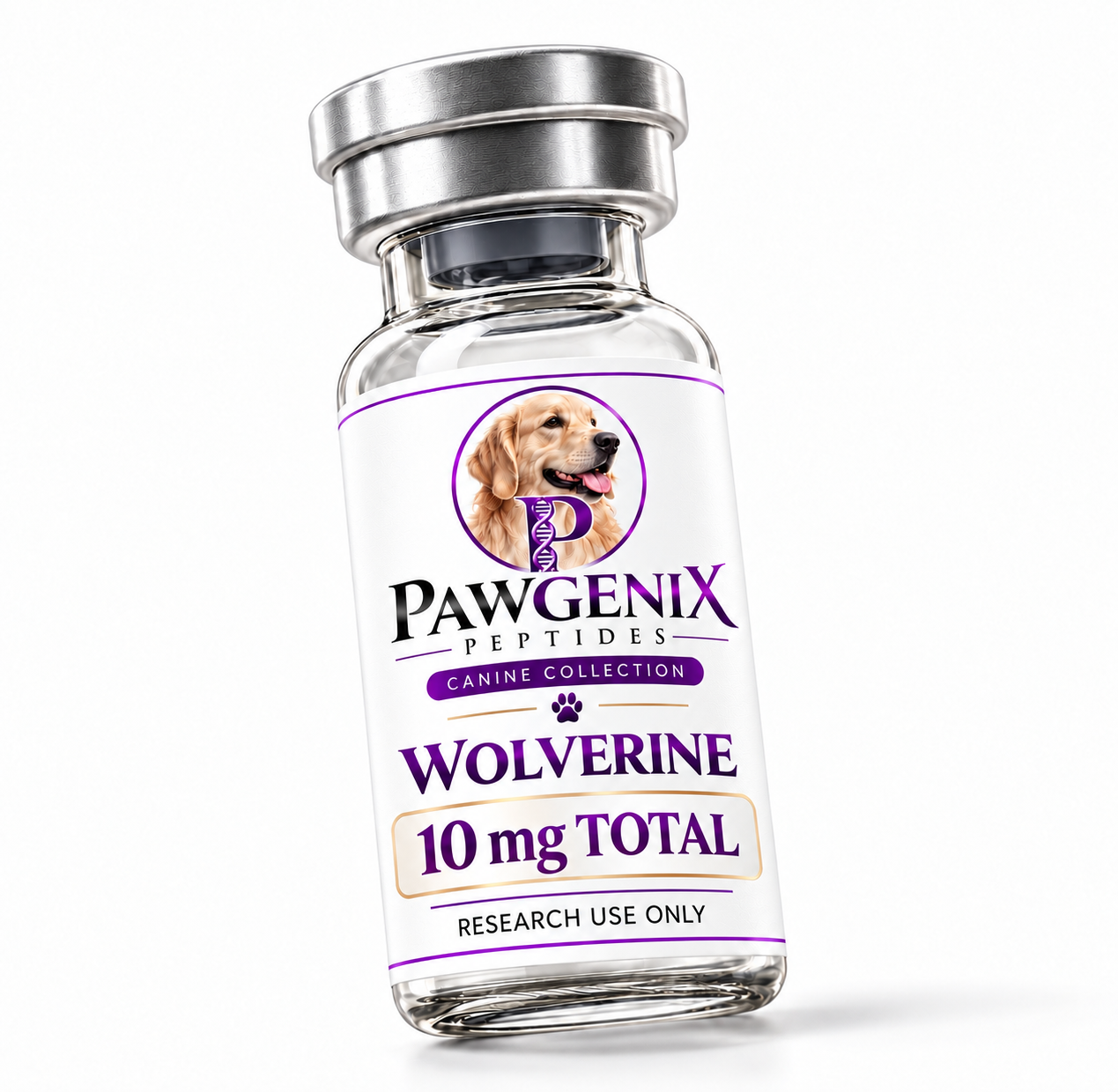
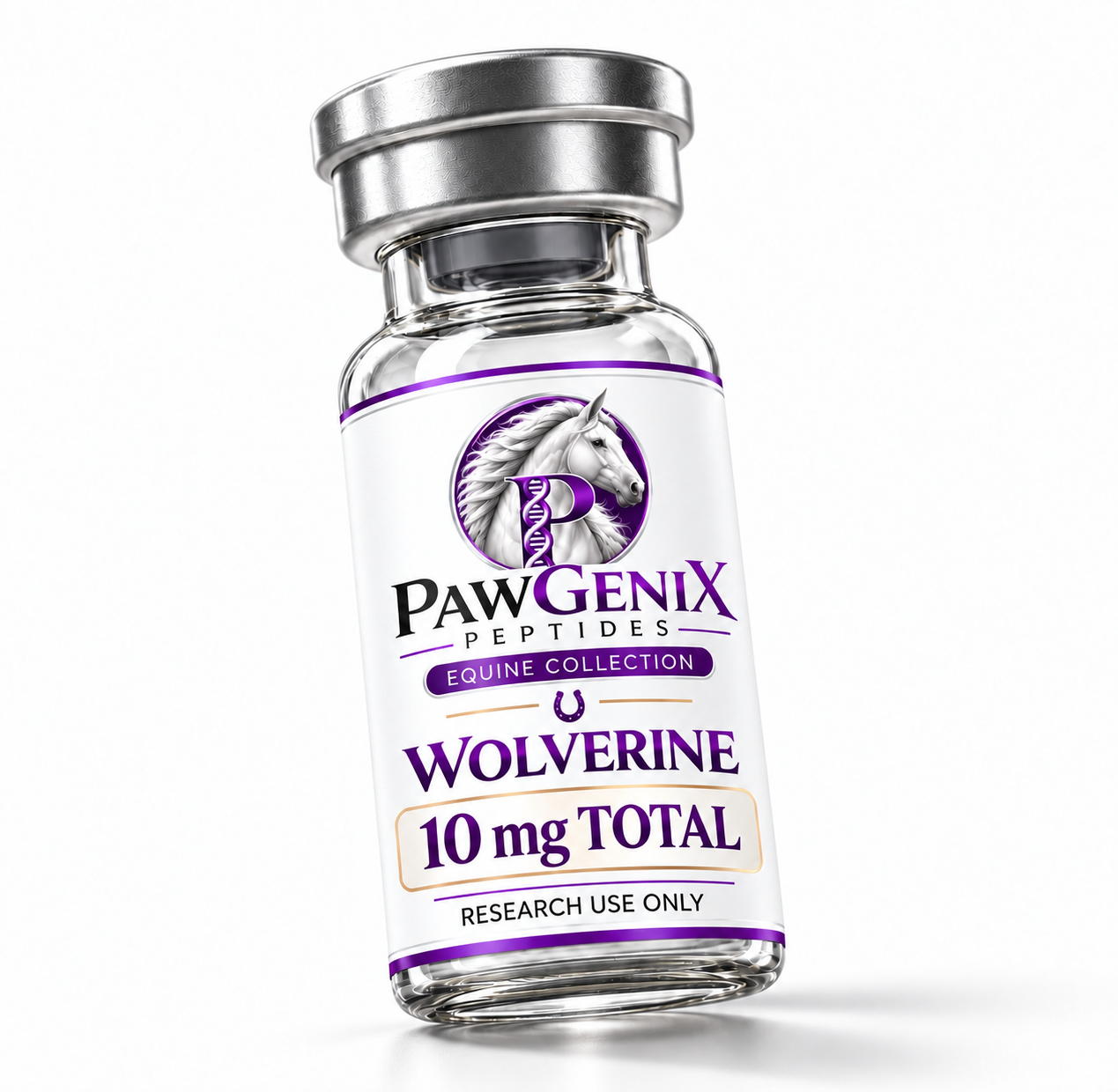
Wolverine

Wolverine is a blend name, not a single peptide. The Pawgenix USA 20 mg edition is labeled as BPC-157 10 mg plus TB-500 10 mg.

Research focus
Composition and comparison of BPC-157 and thymosin-related peptide research.
Biological functions studied
Its listed ingredients are studied separately for tendon-cell behavior and thymosin-related biology. Ingredient mechanisms do not establish a combined Wolverine effect.
Experimental uses
Blend composition and formulation research. The 20 mg edition lists BPC-157 10 mg plus TB-500 10 mg; the 10 mg edition’s component amounts are awaiting confirmation.
Animal research
The linked papers concern individual ingredients in rat tissue or equine analytical samples. They are not animal trials of Pawgenix USA Wolverine.
Pawgenix USA editions
10 mg total · 20 mg total (10 mg + 10 mg)
Explore collection editions

Blends & formulation research

KLOW

KLOW is a four-peptide formulation. The Pawgenix USA 80 mg edition combines BPC-157 10 mg, TB-500 10 mg, GHK-Cu 50 mg, and KPV 10 mg.

Research focus
Ingredient research spans tendon-cell behavior (BPC-157), thymosin-related peptide identity (TB-500), skin and wound biology (GHK-Cu), and intestinal inflammatory signaling (KPV).
Biological functions studied
Its four ingredients connect to research on tendon-cell behavior, thymosin-related peptide identity, skin remodeling, and intestinal inflammatory pathways.
Experimental uses
Multi-ingredient formulation research using the stated BPC-157 10 mg, TB-500 10 mg, GHK-Cu 50 mg, and KPV 10 mg composition. No synergistic effect is assumed.
Animal research
The linked studies use different models and individual ingredients. They do not test the combined 80 mg KLOW formulation or establish its effects in dogs or horses.
Pawgenix USA editions
80 mg total · BPC-157 10 mg + TB-500 10 mg + GHK-Cu 50 mg + KPV 10 mg
Explore collection editions

Research supplies

Research supplies

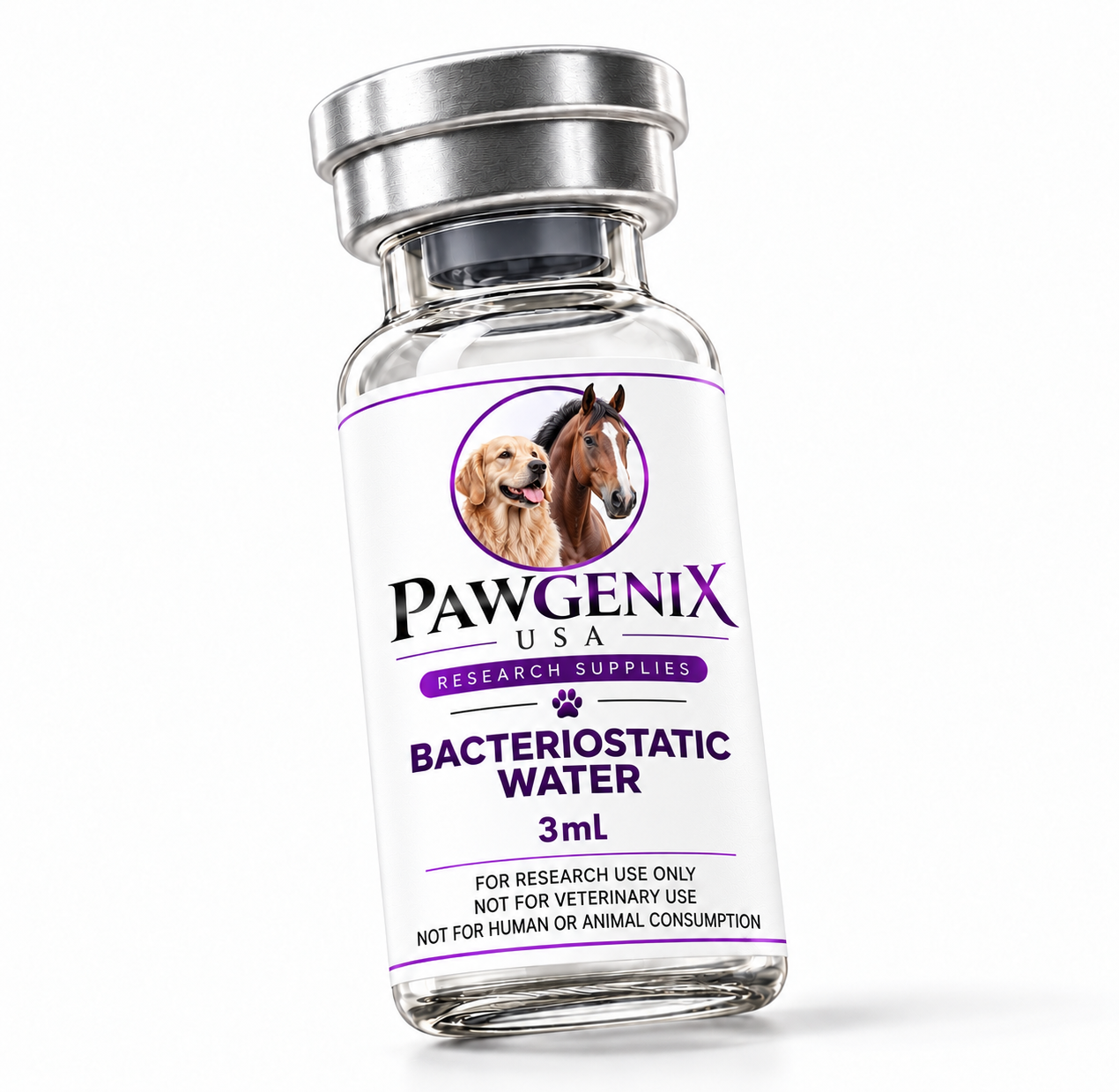
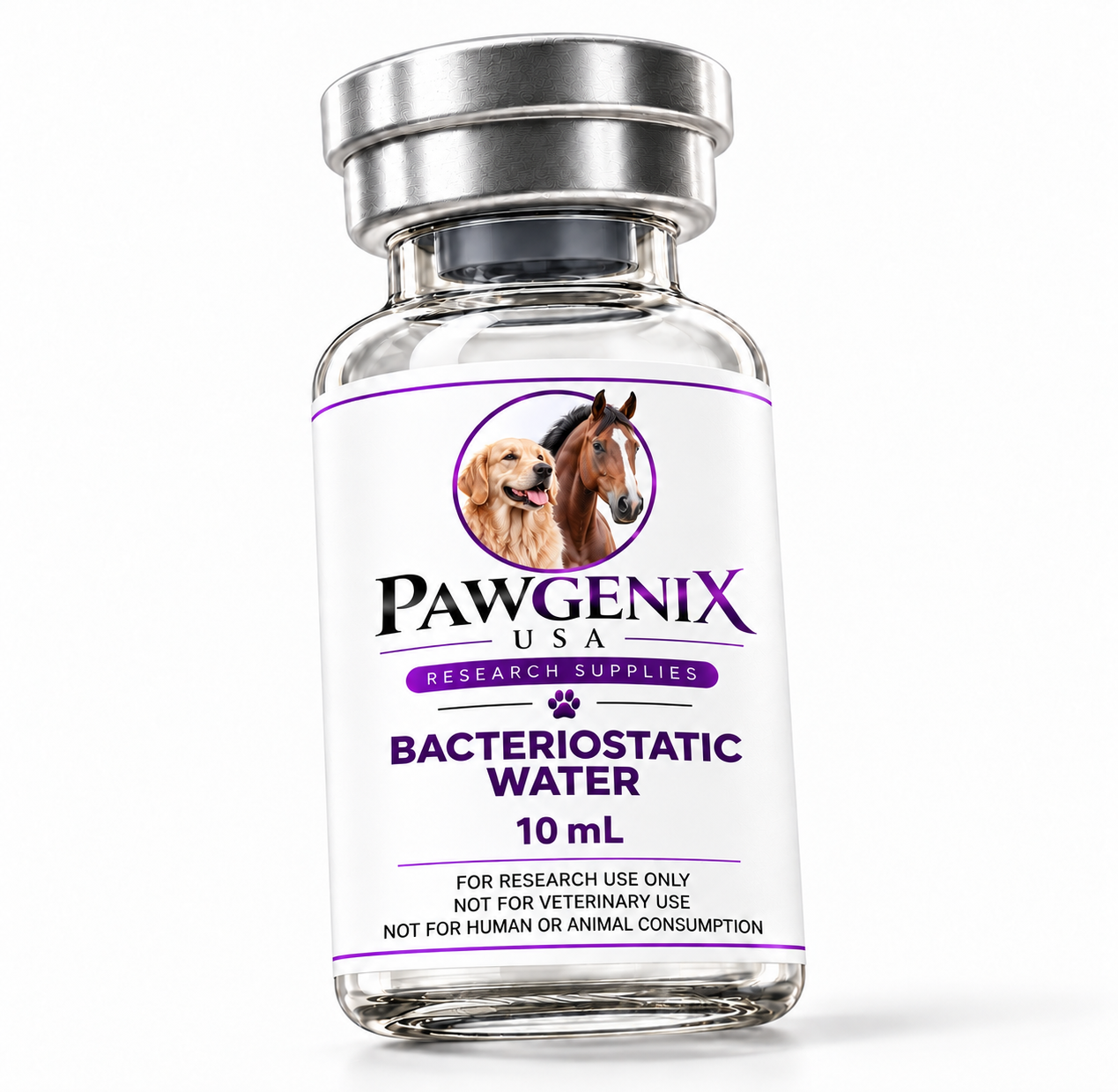
Bacteriostatic Water

Bacteriostatic water is water formulated with a preservative, commonly benzyl alcohol, to inhibit bacterial growth. It is a research supply, not a peptide.

Research focus
Solution preparation in research, with compatibility determined by the specific experimental protocol.
Biological functions studied
A preservative inhibits bacterial growth. This function is different from sterilizing a contaminated solution or establishing compatibility with every peptide.
Experimental uses
Laboratory solution preparation when an experimental protocol specifies a compatible preserved-water formulation. Confirm the actual supplier specifications.
Animal research
This is an ancillary research supply, not an animal peptide or a veterinary-use product. The general manufacturer reference does not verify Pawgenix USA batch composition.
Pawgenix USA editions
3 mL · 10 mL
Explore collection editions

FOR RESEARCH USE ONLY. NOT FOR VETERINARY USE. NOT FOR HUMAN OR ANIMAL CONSUMPTION.

EXPLORE THE RESEARCH LANDSCAPE

Head to paw.
Mane to hoof.

Six research areas. Discover the peptides studied, what researchers measured, and how the evidence differs for dogs and horses.

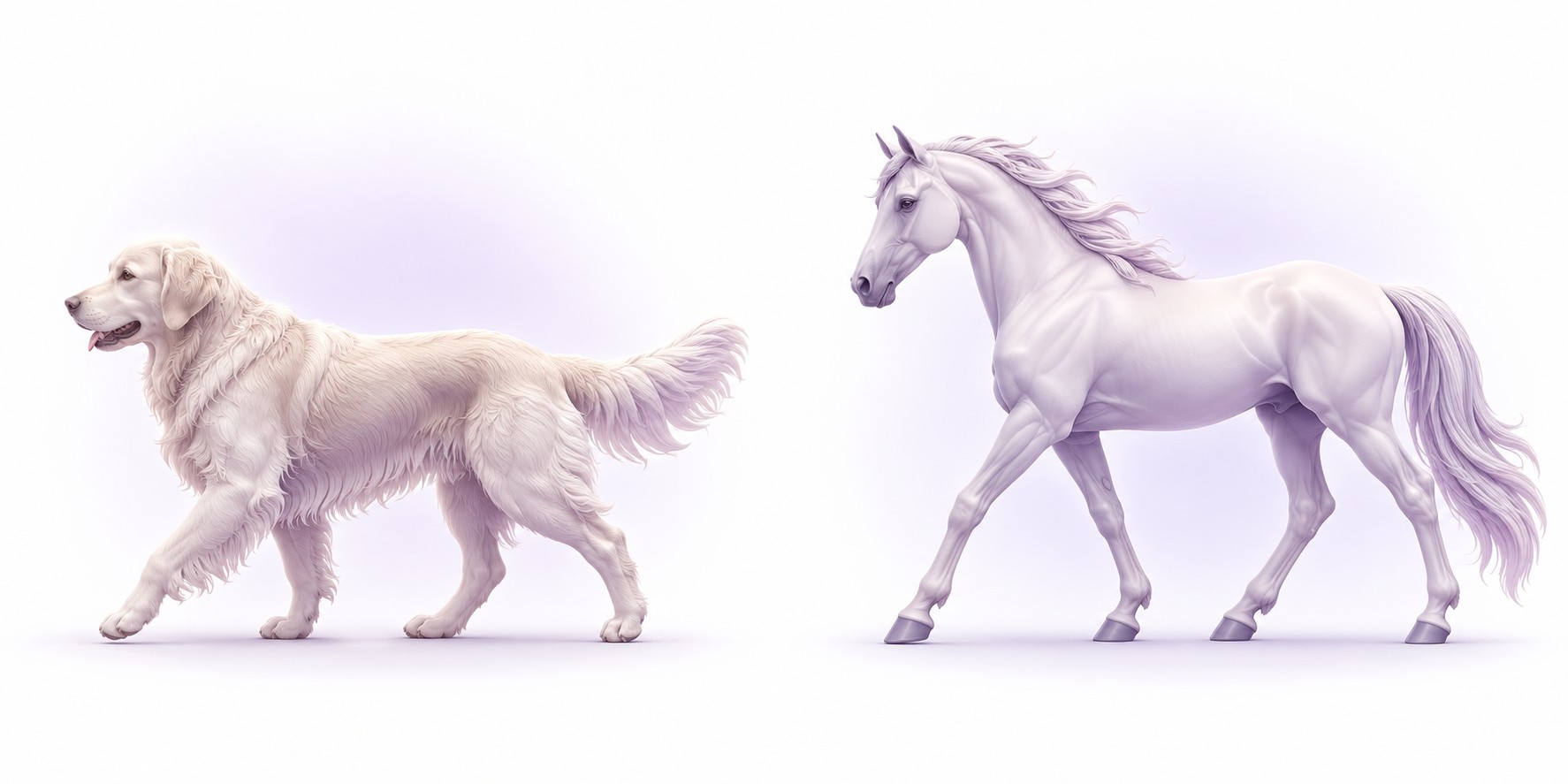
Stylized full-body golden retriever illustration
CANINE RESEARCH PERSPECTIVE

01 — OF 06

Tissue repair

How repair signals work

PEPTIDES & RESEARCH CONNECTIONS

BPC-157 research examines tendon-cell migration, survival, and tissue outgrowth. GHK-Cu research examines collagen and wound remodeling.

Dog research perspective

A 12-dog pad-wound experiment studied a copper tripeptide complex and found more type-I collagen at day 14. This specific preparation and endpoint do not validate Pawgenix products. BPC-157 dog research measured absorption and elimination, not injury recovery.

Related blend ingredients: Wolverine · KLOW
Ingredient connections only. These studies do not test the combined Pawgenix formulations. Wolverine’s 20 mg composition is listed; the 10 mg composition remains unconfirmed.

Read the original studies (3)BPC-157 · rat tendon cells · 2011 ↗Copper tripeptide · dog pad wounds · 1996 ↗BPC-157 · dog pharmacokinetics · 2022 ↗
Explore the original studies

Illustrative research topics, not anatomical locations, treatment benefits, or product indications. For research use only. Not for veterinary use. Not for human or animal consumption.

THE PAWGENIX USA SCIENCE EDIT

Big questions.
A more informed perspective.

Discover the biological questions behind equine and canine research. Open a topic to explore.

01

Tissue repair

How do cells coordinate repair?Related research peptidesBPC-157 · GHK-CuWolverine · related blend
Ingredient research only

Researchers examine cell migration, tissue organization, and signals involved in repair. A laboratory finding does not establish recovery benefits in an animal.

BPC-157 has been studied in rat tendon cells; GHK-Cu in cell and rodent wound models. These studies examine repair processes, not proven recovery benefits in dogs or horses.

Related formulation names: Wolverine · KLOW. These blends contain one or more listed ingredients. Ingredient studies do not demonstrate effects or synergy of the combined blend.

02

Movement & mobility

What shapes connective tissue function?Related research peptidesBPC-157Wolverine · related blend
Ingredient research only

Tendons, ligaments, cartilage, and muscle have different biology. Results from one tissue or model cannot be assumed to apply to another.

The connection is tendon-cell research. It does not establish improved mobility, arthritis relief, or joint function in dogs or horses.

Related formulation names: Wolverine · KLOW. These blends contain one or more listed ingredients. Ingredient studies do not demonstrate effects or synergy of the combined blend.

03

Skin & coat

How does the skin barrier respond?Related research peptidesGHK-Cu

Skin research explores barrier function, cellular turnover, and wound biology. Coat appearance alone does not measure a peptide’s effects.

Research concerns skin remodeling and experimental wounds, including a GHK-Cu liposome formulation in mice. Coat growth or coat quality was not established by these studies.

Related formulation names: KLOW. These blends contain one or more listed ingredients. Ingredient studies do not demonstrate effects or synergy of the combined blend.

04

Gut biology

What regulates intestinal inflammation?Related research peptidesKPV

Laboratory studies can investigate intestinal cells and inflammatory pathways. Mouse findings need further evidence before conclusions about dogs or horses.

KPV has been studied in intestinal epithelial cells, immune cells, and mouse colitis models. These findings do not establish treatment of canine or equine digestive conditions.

Related formulation names: KLOW. These blends contain one or more listed ingredients. Ingredient studies do not demonstrate effects or synergy of the combined blend.

05

Tendons & soft tissue

How do cells respond to strain?Related research peptidesBPC-157Wolverine · related blend
Ingredient research only

Cell survival and migration are useful research measures, but they are different from demonstrating stronger tendons or faster clinical recovery.

Rat tendon experiments measured cell migration, outgrowth, and survival under stress. TB-500 identity and detection research in horses does not demonstrate tendon recovery.

Related formulation names: Wolverine · KLOW. These blends contain one or more listed ingredients. Ingredient studies do not demonstrate effects or synergy of the combined blend.

06

Immune signaling

How are immune responses regulated?Related research peptidesKPV · ARA 290

Inflammation involves many cells and signals. Changing one marker does not automatically mean improved immunity or a health benefit.

KPV research examines inflammatory signaling in epithelial and immune cells. ARA 290 research examines spinal microglial responses in a rat nerve-injury model. Neither establishes general immune enhancement.

07

Aging & cognition

How does biology change with age?Related research peptidesNo supported catalog match

Age-related changes can involve the nervous system, metabolism, and tissues. Evidence must match the specific species and outcome being discussed.

No product match is supported for this topic by the studies reviewed for this website. Nerve-injury research is not evidence of improved cognition or longevity.

08

Wound biology

What happens during tissue remodeling?Related research peptidesGHK-Cu · BPC-157Wolverine · related blend
Ingredient research only

Wound research measures processes such as cell proliferation and blood vessel formation. The formulation and experimental model matter.

GHK-Cu research includes experimental rodent wounds; BPC-157 research includes repair-related tendon-cell processes. Formulation and model differences matter.

Related formulation names: Wolverine · KLOW. These blends contain one or more listed ingredients. Ingredient studies do not demonstrate effects or synergy of the combined blend.

09

Energy & metabolism

What influences cellular energy?Related research peptidesNo supported catalog match

Metabolic pathways connect nutrition, activity, and cellular function. Research endpoints should not be confused with claims of greater stamina.

No product match is supported for energy, stamina, or metabolic benefits by the studies reviewed here. Pharmacokinetics—how a peptide is absorbed and eliminated—is a different question.

10

Inflammatory pathways

When is inflammation helpful or harmful?Related research peptidesKPV · ARA 290

Inflammation is part of normal defense and repair. Researchers study its timing, intensity, and resolution rather than treating every response as undesirable.

KPV studies examine NF-kappaB/MAPK signaling and mouse intestinal inflammation. ARA 290 studies examine neuroinflammatory responses after rat nerve injury. These are model-specific findings.

Related formulation names: KLOW. These blends contain one or more listed ingredients. Ingredient studies do not demonstrate effects or synergy of the combined blend.

These are areas of biological research, not claims that Pawgenix USA products prevent or treat animal illness.

Explore the science
Equine Pawgenix USA identityCanine Pawgenix USA identityTWO COLLECTIONS. ONE PAWGENIX USA.

THE PAWGENIX USA STORY

MEET PAWGENIX USA. A BOLD NEW NAME IN EQUINE & CANINE PEPTIDES.

Two collections. One unmistakable identity.

Specially formulated for canine and equine research. Unmistakably Pawgenix USA. Our horse and dog collections bring seven peptide lines into one focused destination—from ARA 290 and BPC-157 to TB-500, KPV, GHK-Cu, Wolverine, and KLOW.

Explore single-peptide editions and signature blends in a range of labeled strengths. From our striking equine collection to our signature canine collection, every detail carries the Pawgenix USA identity.

Discover the brand. Explore the collections. Meet Pawgenix USA.

FOR RESEARCH USE ONLY. NOT FOR VETERINARY USE. NOT FOR HUMAN OR ANIMAL CONSUMPTION.

PAWGENIX USA RESEARCH MEMBERSHIP

A closer connection.
$19 per month.

5% off eligible peptides, exclusive community chat, a member reading room, and a printable research checklist. Membership starts after payment confirmation. Water is excluded; monthly discounts do not stack.

Explore membership & Subscribe & Save

Shopping made simple.

Subscribe monthly. Save 5%.

No product subscription fee. Select monthly at checkout for 5% off eligible peptides, with $15 U.S. shipping per shipment. International shipping and taxes are confirmed by invoice. Recurring charges are not connected.

Visit the Pawgenix USA shop

YOUR NEXT STEP

Discover your collection.
Start your request.

Choose a product and let us know how many vials you’re interested in.

  1. Select your peptide and collection.
  2. Submit your details and questions.
  3. Keep your request reference for follow-up.

This is a quote request. Pricing, availability, shipping, and payment arrangements must be confirmed before an order is finalized. No payment is collected here.

Request pricing & availability

Your contact details are saved with this request for order-related follow-up.

A LITTLE MORE CLARITY

Common questions.

Product details, collections,
and the next step.

What does Pawgenix USA offer?

ARA 290 (10 and 16 mg), BPC-157 (5 and 10 mg), TB-500 (5 and 10 mg), KPV (5 and 10 mg), KLOW (80 mg), GHK-Cu (50 and 100 mg), and Wolverine (10 mg total, component amounts to be confirmed; or TB-500 10 mg + BPC-157 10 mg, labeled 20 mg / 3 mL). Every strength is presented in dog and horse research collections.

Are these products for use on animals?

No. All products are for research use only. They are not for veterinary use or human or animal consumption.

How do I order?

Visit the shop, sign in with ChatGPT, and create your Pawgenix USA customer profile. Add products to your cart and submit checkout for an invoice. Shipping, any applicable taxes, and payment instructions appear in your account once confirmed. Quote-only products use the request form.

Where are the prices?

Prices per vial in USD appear in the catalog and shop. KLOW 80 mg is $70 per vial in both collections. U.S. shipping is $15 per order. International shipping and any applicable taxes are confirmed by invoice. No payment is collected at checkout.

Are the amounts dosing instructions?

No. The mg and mL details identify labeled product specifications, not a dosage or administration protocol.

HORSE. DOG. PAWGENIX USA.

Discover the collection.
Remember the name.

Explore Pawgenix USA